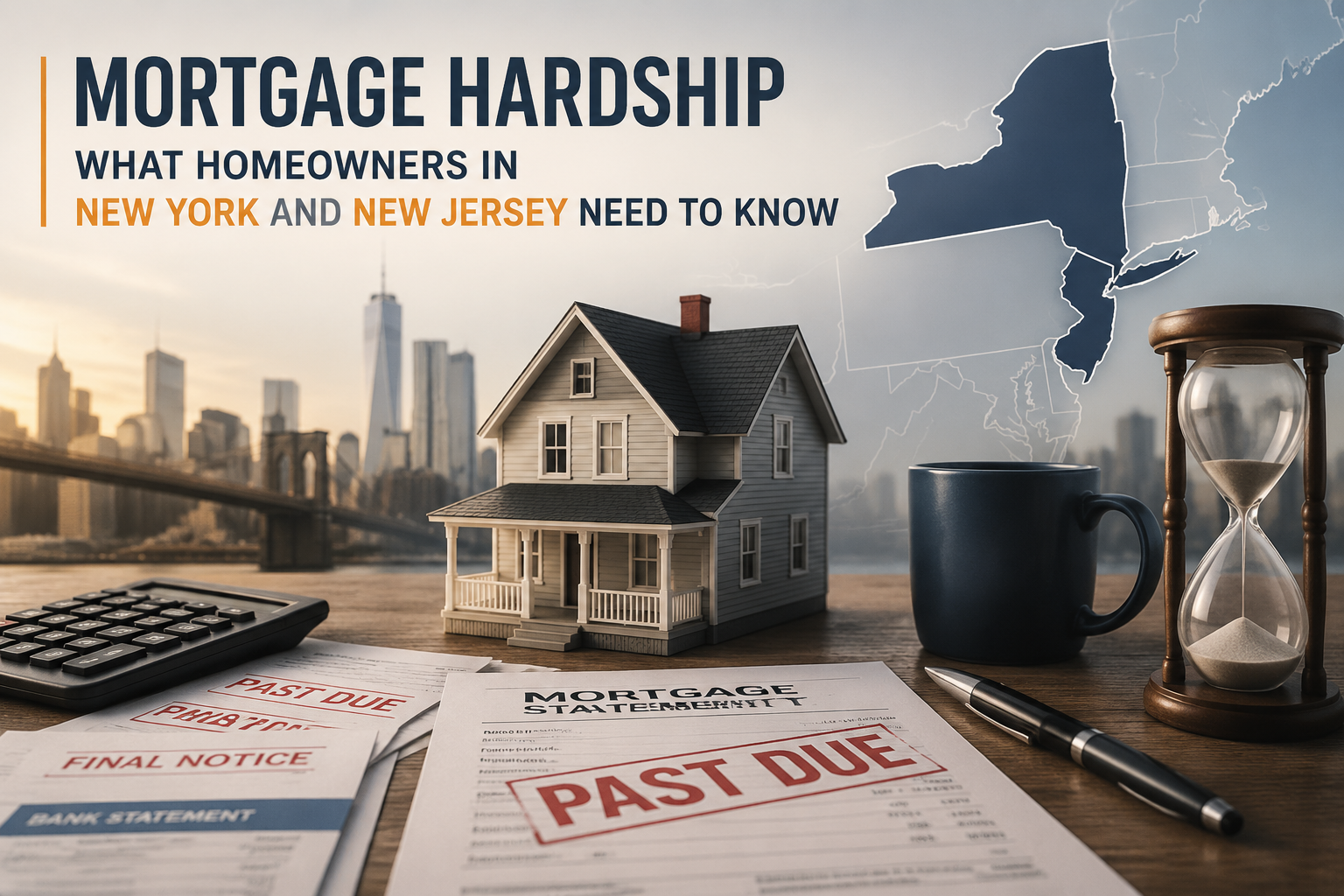
Mortgage hardship can affect homeowners at any stage of homeownership. Financial challenges often arise unexpectedly, making it difficult to keep up with monthly mortgage payments. Whether caused by job loss, reduced income, medical expenses, divorce, or rising living costs, a mortgage hardship can quickly create stress and uncertainty.
Many homeowners believe that falling behind on payments automatically leads to foreclosure. However, there are often options available that may help homeowners regain control of their financial situation before losing their property.
For homeowners in New York and New Jersey, understanding how a mortgage hardship impacts available solutions can be the first step toward protecting their home and financial future.
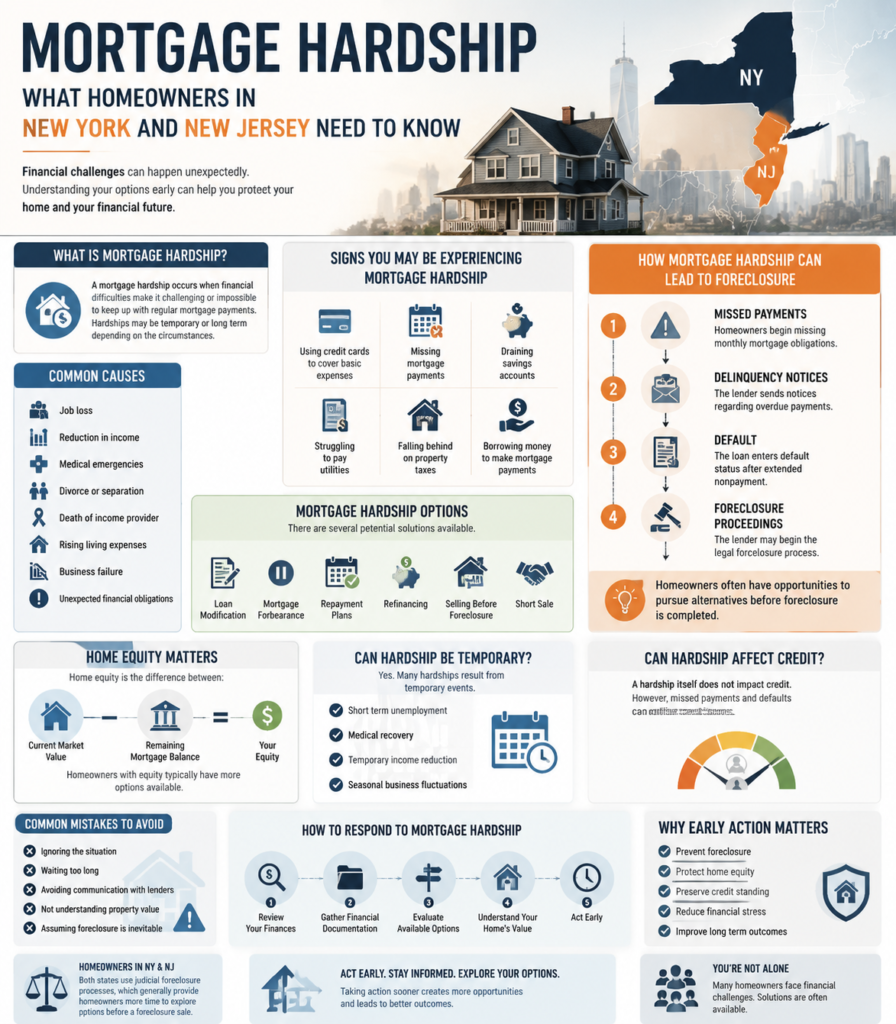
What Is Mortgage Hardship?
A mortgage hardship occurs when a homeowner experiences financial difficulties that make it challenging or impossible to maintain regular mortgage payments.
Hardships may be temporary or long term depending on the circumstances.
Common causes include:
- Job loss
- Reduction in income
- Medical emergencies
- Divorce or separation
- Death of a household income provider
- Rising living expenses
- Business failure
- Unexpected financial obligations
When a hardship affects a homeowner’s ability to pay their mortgage, it is important to explore available options as early as possible.
Signs You May Be Experiencing Mortgage Hardship
Many homeowners do not recognize a mortgage hardship until they are already behind on payments.
Warning signs often include:
- Using credit cards to cover basic expenses
- Missing mortgage payments
- Draining savings accounts
- Struggling to pay utilities
- Falling behind on property taxes
- Borrowing money to make mortgage payments
Recognizing these signs early may help homeowners avoid more serious financial consequences.
How Mortgage Hardship Can Lead to Foreclosure
A prolonged mortgage hardship can eventually result in mortgage delinquency and foreclosure if no action is taken.
The typical progression may include:
Missed Payments
Homeowners begin missing monthly mortgage obligations.
Delinquency Notices
The lender sends notices regarding overdue payments.
Default
The loan enters default status after extended nonpayment.
Foreclosure Proceedings
The lender may begin the legal foreclosure process.
While this process can be stressful, homeowners often have opportunities to pursue alternatives before foreclosure is completed.
Mortgage Hardship Options for Homeowners
When facing a mortgage hardship, homeowners may have several potential solutions available.
Loan Modification
A loan modification adjusts the terms of the existing mortgage to create more manageable payments.
Mortgage Forbearance
Forbearance temporarily reduces or suspends mortgage payments during periods of hardship.
Repayment Plans
Some lenders allow homeowners to gradually catch up on missed payments.
Refinancing
Refinancing may reduce monthly obligations for qualified borrowers.
Selling Before Foreclosure
Homeowners may choose to sell their property before foreclosure proceedings progress.
Short Sale
A lender approved short sale may provide an alternative when the mortgage balance exceeds property value.
Mortgage Hardship and Home Equity
One important factor homeowners should evaluate is home equity.
Home equity represents the difference between:
- The current market value of the property
- The remaining mortgage balance
Homeowners with significant equity often have additional options available compared to homeowners who owe more than their property is worth.
Understanding equity can play an important role in determining the best course of action.
Can Mortgage Hardship Be Temporary?
Yes.
Many cases of mortgage hardship result from temporary events.
Examples include:
- Short term unemployment
- Medical recovery
- Temporary income reduction
- Seasonal business fluctuations
In these situations, lenders may be more willing to consider temporary relief options.
Can Mortgage Hardship Affect Credit?
A mortgage hardship itself does not necessarily impact credit.
However, missed payments and loan defaults can affect credit scores.
This is why many homeowners seek assistance before payment issues become severe.
Taking action early may help reduce long term financial consequences.
Mortgage Hardship in New York and New Jersey
Homeowners in New York and New Jersey face unique financial pressures.
Higher housing costs, property taxes, insurance expenses, and general living costs can make financial challenges more difficult to manage.
Because both states use judicial foreclosure processes, homeowners often have time to evaluate available options before a foreclosure sale occurs.
Understanding those options early can significantly improve outcomes.
Common Mistakes Homeowners Make During Mortgage Hardship
Ignoring the Situation
Many homeowners hope financial problems will resolve on their own.
Waiting Too Long
Delays often reduce available solutions.
Avoiding Communication
Lenders may offer programs homeowners never explore.
Not Understanding Property Value
Knowing current market value is essential when evaluating available options.
Assuming Foreclosure Is Inevitable
Many homeowners have alternatives available before foreclosure occurs.
How to Respond to Mortgage Hardship
If you are experiencing a mortgage hardship, consider taking these steps:
Review Your Finances
Understand your income, expenses, debts, and available resources.
Gather Financial Documentation
Prepare records that may be required by lenders.
Evaluate Available Options
Explore loan modifications, repayment plans, forbearance, and other alternatives.
Understand Your Home’s Value
Knowing property value can help determine available strategies.
Act Early
Early action often creates the greatest number of opportunities.
Why Early Action Matters
Early action may help:
- Prevent foreclosure
- Protect home equity
- Preserve credit standing
- Reduce financial stress
- Improve long term outcomes
Waiting until legal deadlines approach can limit flexibility and make solutions more difficult to achieve.
Related Resources
- Foreclosure Prevention
- Loan Modification
- Can Bankruptcy Stop Foreclosure?
- Can I Sell My House Before Foreclosure?
- Foreclosure vs Short Sale
- Distressed Asset Advisory Services
External Resources
Reddit Discussion:
https://www.reddit.com/r/RealEstate/
HUD Housing Counseling:
https://www.hud.gov/
Consumer Financial Protection Bureau:
https://www.consumerfinance.gov/
Conclusion
Mortgage hardship can create significant challenges for homeowners, but foreclosure is not always the only outcome. Understanding available options, evaluating financial circumstances, and taking action early can help homeowners protect their property and financial future. For homeowners in New York and New Jersey, exploring solutions before financial difficulties escalate may provide the best opportunity for long term stability.