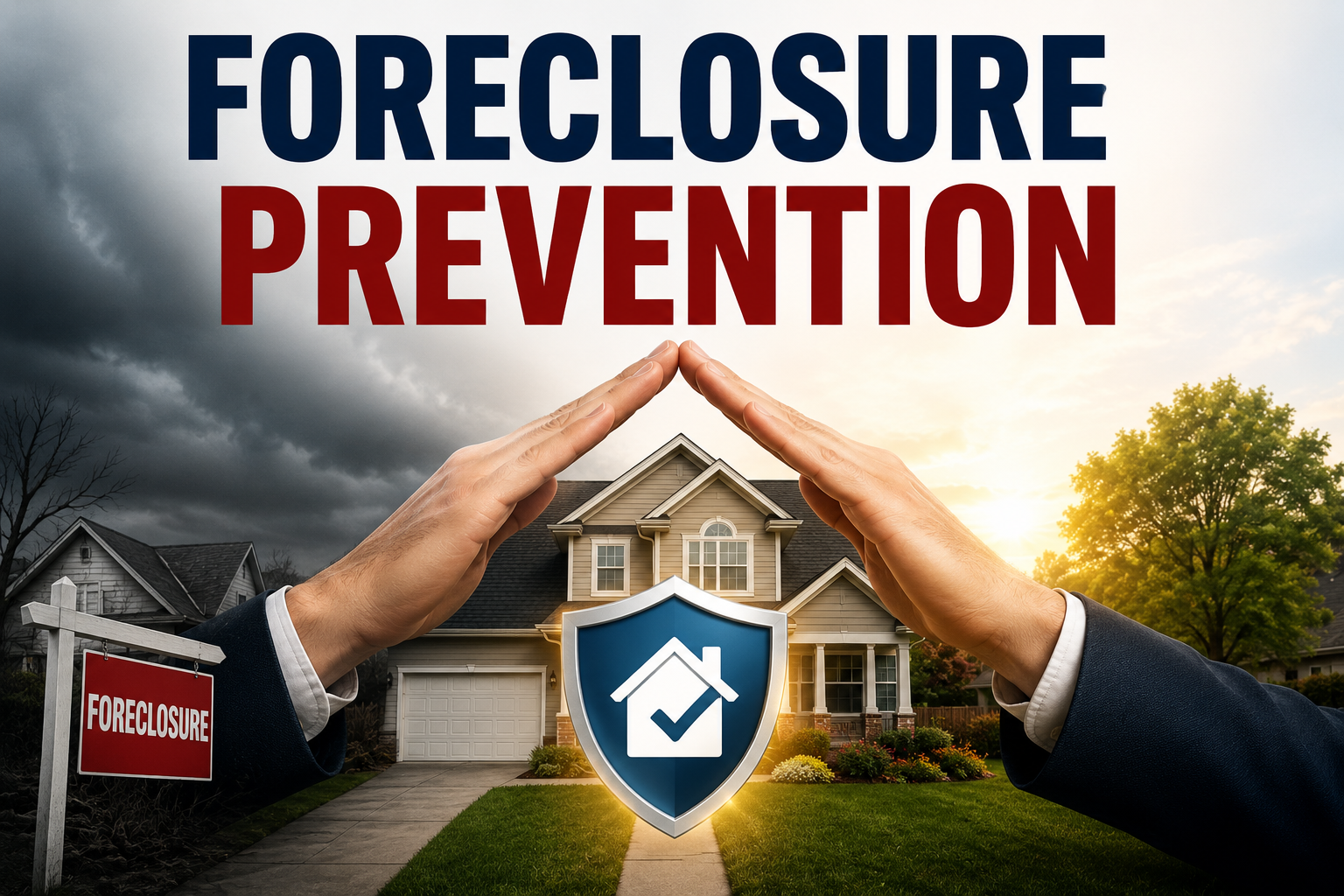
Foreclosure Prevention becomes a priority the moment mortgage payments start falling behind. If you have received notices from your lender, are worried about a foreclosure sale, or simply feel overwhelmed by mounting financial pressure, you are not alone.
Thousands of homeowners across New York and New Jersey face foreclosure concerns every year. Job loss, rising living expenses, divorce, medical bills, unexpected emergencies, and changes in income can quickly make mortgage payments difficult to manage.
The biggest mistake homeowners make is assuming foreclosure cannot be stopped.
In reality, many homeowners still have options available. The earlier you take action, the more opportunities you may have to protect your property, preserve your equity, and avoid the long term consequences of foreclosure.
This guide explains what Foreclosure Prevention means, how the foreclosure process works, and the strategies that may help homeowners avoid losing their homes.
What Is Foreclosure Prevention?
Foreclosure Prevention refers to the actions homeowners take to avoid foreclosure after falling behind on mortgage payments.
The goal is simple: find a solution before the lender completes the foreclosure process.
Depending on your circumstances, foreclosure prevention strategies may include:
- Loan modifications
- Mortgage forbearance
- Repayment plans
- Refinancing
- Selling the property
- Short sales
- Bankruptcy protection
Every situation is different, which is why understanding your available options early is so important.
Why Foreclosure Prevention Matters
Many homeowners wait until they receive a court notice or foreclosure complaint before seeking help.
Unfortunately, delays can limit available solutions.
A completed foreclosure can impact:
- Credit scores
- Future homeownership opportunities
- Loan approvals
- Financial flexibility
- Family stability
Effective Foreclosure Prevention focuses on reducing these risks before the situation becomes more difficult to resolve.
The Real Cost of Waiting Too Long
When homeowners delay action, they often lose opportunities that could have protected their financial future.
For example:
A homeowner with significant equity may wait until a foreclosure auction is scheduled.
At that point, they may lose the chance to:
- Sell the property on their terms
- Preserve equity
- Avoid foreclosure on their credit report
- Negotiate favorable solutions
The sooner homeowners address foreclosure concerns, the greater the likelihood of finding a successful outcome.
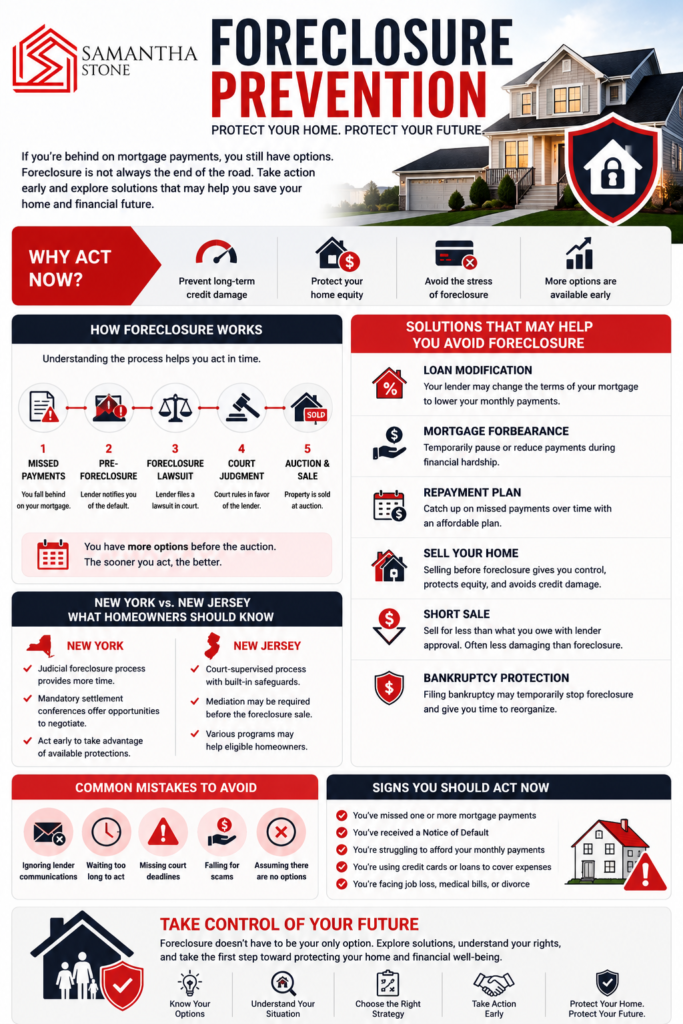
How Does Foreclosure Work in New York and New Jersey?
New York and New Jersey both use judicial foreclosure processes.
This means lenders must go through the court system before selling a property.
Although timelines vary, the process generally includes:
Missed Mortgage Payments
The lender begins contacting the borrower regarding overdue payments.
Pre Foreclosure
The homeowner is behind on payments but still owns the property.
Foreclosure Lawsuit
The lender files legal action seeking foreclosure approval.
Court Proceedings
Both parties have opportunities to participate in the legal process.
Foreclosure Judgment
The court authorizes the foreclosure sale.
Foreclosure Auction
The property is scheduled for public sale.
Ownership Transfer
The property is sold and ownership changes hands.
Many Foreclosure Prevention opportunities exist before the final foreclosure sale occurs.
Foreclosure Prevention Strategy #1: Contact Your Lender Immediately
Many homeowners avoid lender communication because they fear bad news.
This is often a costly mistake.
Mortgage companies frequently offer programs designed to help borrowers facing temporary financial hardship.
Potential options may include:
- Reduced payments
- Repayment plans
- Temporary relief programs
- Loan modifications
Open communication can create opportunities that may not exist later.
Foreclosure Prevention Strategy #2: Apply for a Loan Modification
A loan modification changes the terms of an existing mortgage.
Depending on lender approval, modifications may:
- Lower monthly payments
- Reduce interest rates
- Extend repayment periods
- Add missed payments to the loan balance
For many homeowners, this is one of the most effective Foreclosure Prevention solutions available.
Foreclosure Prevention Strategy #3: Request Mortgage Forbearance
Forbearance allows borrowers to temporarily pause or reduce mortgage payments during financial hardship.
This option is commonly used after:
- Job loss
- Medical emergencies
- Temporary income reduction
- Family crises
Forbearance can provide valuable time to stabilize finances while avoiding immediate foreclosure risk.
Foreclosure Prevention Strategy #4: Sell Before Foreclosure
Many homeowners assume selling is a last resort.
In reality, selling before foreclosure may be one of the smartest financial decisions available.
Benefits may include:
- Avoiding foreclosure
- Preserving equity
- Protecting credit
- Reducing financial stress
- Maintaining control over the process
For homeowners in New York and New Jersey, selling before foreclosure often creates more flexibility than waiting for a lender to take control of the property.
Can I Sell My House Before Foreclosure?
Yes.
In many situations, homeowners can sell their property before foreclosure is completed.
This approach may allow them to:
- Pay off mortgage debt
- Avoid foreclosure on their record
- Access remaining equity
- Transition into a more manageable financial situation
Many distressed homeowners discover this option before exploring more complex alternatives.
Foreclosure Prevention Strategy #5: Consider a Short Sale
If the mortgage balance exceeds the property’s market value, a short sale may be an option.
A short sale allows the lender to approve a sale for less than the amount owed.
While not ideal, many homeowners find it preferable to foreclosure because it often results in less financial damage.
Can Bankruptcy Stop Foreclosure?
This is one of the most common foreclosure related questions.
In many cases, filing bankruptcy triggers an automatic stay that temporarily pauses foreclosure proceedings.
Bankruptcy may provide additional time to:
- Catch up on payments
- Negotiate with lenders
- Develop a financial recovery strategy
Because bankruptcy has serious financial implications, homeowners should seek legal guidance before proceeding.
Ways to Stop Foreclosure Immediately
When foreclosure deadlines approach, homeowners often search for immediate solutions.
Possible options may include:
- Mortgage reinstatement
- Loan modification approval
- Property sale
- Repayment agreements
- Bankruptcy protection
The right solution depends on the homeowner’s financial circumstances and stage of foreclosure.
When Is It Too Late for Foreclosure Prevention?
Many homeowners wonder when foreclosure becomes impossible to stop.
In most cases, foreclosure becomes significantly more difficult after the property has been sold at a foreclosure auction and ownership has transferred.
Before that point, solutions may still be available.
This is why immediate action is critical.
Foreclosure Prevention Mistakes to Avoid
Homeowners often reduce their options by:
- Ignoring lender communications
- Missing court deadlines
- Waiting until foreclosure auctions are scheduled
- Falling for foreclosure rescue scams
- Assuming there is no solution
Understanding available options early can make a substantial difference.
Why New York and New Jersey Homeowners Need Local Guidance
Foreclosure laws, timelines, and procedures vary by state.
Homeowners in New York and New Jersey often benefit from understanding:
- Judicial foreclosure timelines
- Settlement conferences
- Local housing market conditions
- Equity preservation strategies
- Property sale opportunities
Local market knowledge can be valuable when evaluating foreclosure alternatives.
Key Takeaways
- Foreclosure Prevention starts with taking action early.
- Many homeowners have more options than they realize.
- Loan modifications and forbearance may help borrowers stay in their homes.
- Selling before foreclosure can preserve equity and avoid additional financial damage.
- Bankruptcy may temporarily stop foreclosure proceedings.
- New York and New Jersey homeowners often have opportunities to explore alternatives before a foreclosure sale occurs.
Frequently Asked Questions
What is foreclosure prevention?
Foreclosure prevention includes strategies designed to help homeowners avoid losing their property due to missed mortgage payments.
How do I stop foreclosure?
Possible solutions include loan modifications, repayment plans, forbearance agreements, property sales, short sales, and bankruptcy protection.
Can bankruptcy stop foreclosure?
Bankruptcy may temporarily stop foreclosure through an automatic stay issued by the court.
Can I sell my house before foreclosure?
Yes. Many homeowners successfully sell their property before foreclosure is completed.
When is it too late to stop foreclosure?
Foreclosure is generally most difficult to stop after the property has been sold at a foreclosure auction and ownership has transferred.
How long does foreclosure take in New York and New Jersey?
Timelines vary, but judicial foreclosure proceedings often take longer than foreclosure processes in many other states.
Conclusion
Foreclosure Prevention is about creating options before foreclosure limits them. Homeowners who act early often have more opportunities to protect their property, preserve equity, and reduce long term financial damage. Whether through a loan modification, repayment plan, short sale, or selling before foreclosure, understanding your options can help you make informed decisions during a challenging time.
What Should You Do Next?
If you are facing foreclosure in New York or New Jersey, waiting rarely improves the situation. Understanding your options early can help you protect your home, your equity, and your financial future. Exploring available solutions before foreclosure progresses may provide opportunities that are no longer available later in the process.