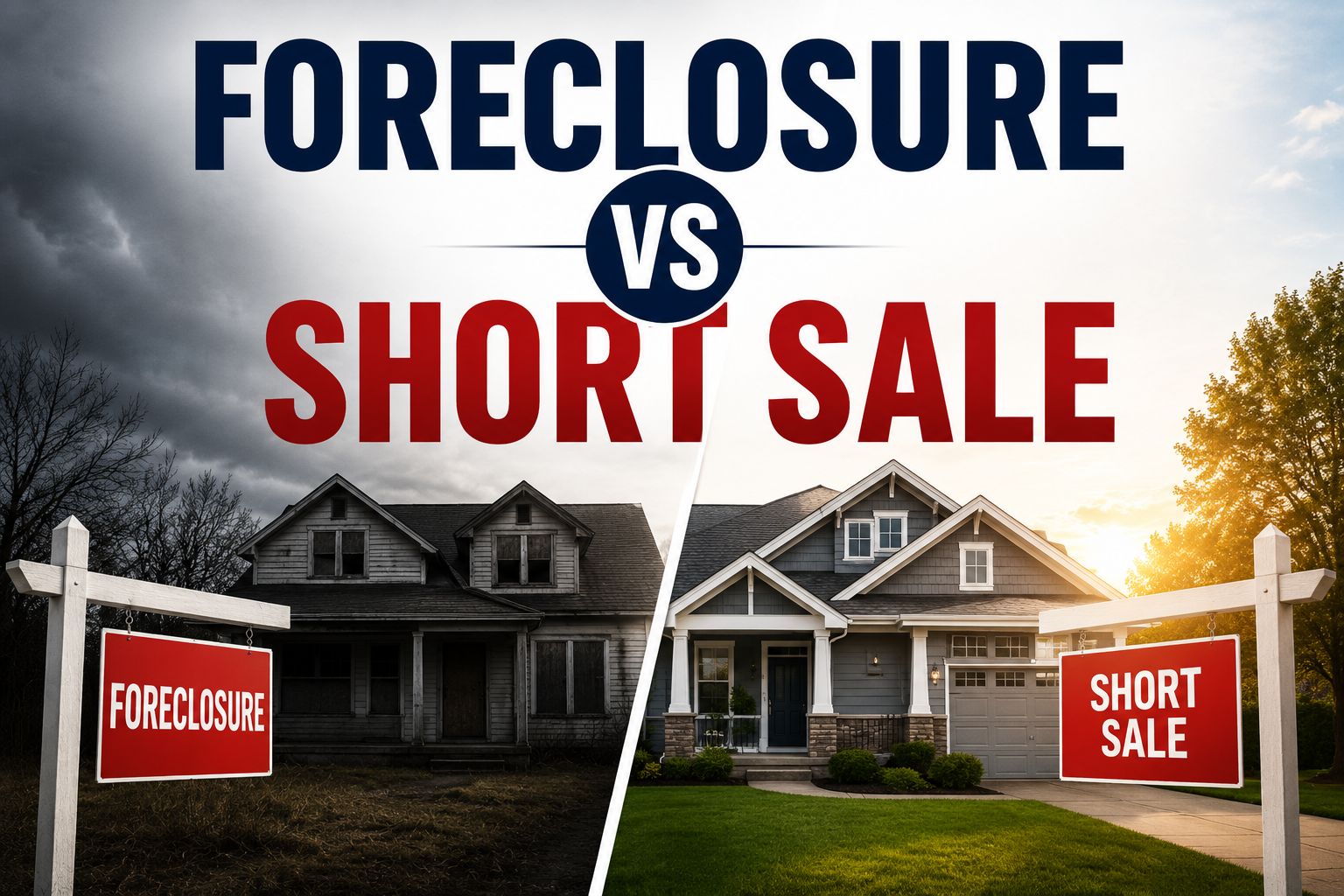
If you’re behind on mortgage payments and worried about losing your home, you’ve likely come across the terms foreclosure vs short sale. Many homeowners in New York and New Jersey face this difficult situation every year, often wondering which option will have the least impact on their finances and future housing opportunities.
The truth is that both foreclosure and a short sale are serious situations, but they are not the same. Understanding the differences can help you make a more informed decision before your options become limited.
For many distressed homeowners, comparing foreclosure vs short sale is not just about avoiding financial hardship. It is about protecting credit, preserving equity, reducing stress, and finding the best path forward.
This guide explains how each option works, the advantages and disadvantages of both, and what homeowners in New York and New Jersey should know before making a decision.
What Is Foreclosure?
Foreclosure is the legal process lenders use to recover unpaid mortgage debt when a homeowner stops making mortgage payments.
After multiple missed payments, the lender may begin foreclosure proceedings and eventually sell the property to recover the outstanding loan balance.
In New York and New Jersey, foreclosure typically involves court proceedings because both states use judicial foreclosure processes.
Once the foreclosure process is complete, homeowners lose ownership of the property.
What Is a Short Sale?
A short sale occurs when a homeowner sells a property for less than the amount owed on the mortgage, with lender approval.
For example, if a homeowner owes $400,000 on a mortgage but the property is worth only $350,000, the lender may agree to accept the lower amount through a short sale.
A short sale allows homeowners to sell the property before foreclosure is completed.
Many homeowners exploring foreclosure vs short sale discover that a short sale provides greater control over the outcome.
Why Homeowners Compare Foreclosure vs Short Sale
When financial hardship occurs, homeowners often feel trapped between difficult choices.
Common situations include:
- Job loss
- Medical expenses
- Divorce
- Rising living costs
- Unexpected financial emergencies
- Investment property losses
In these situations, homeowners frequently ask:
- Can I stop foreclosure?
- Is a short sale better than foreclosure?
- Which option hurts my credit less?
- Can I sell my house before foreclosure?
Understanding foreclosure vs short sale can help answer these important questions.
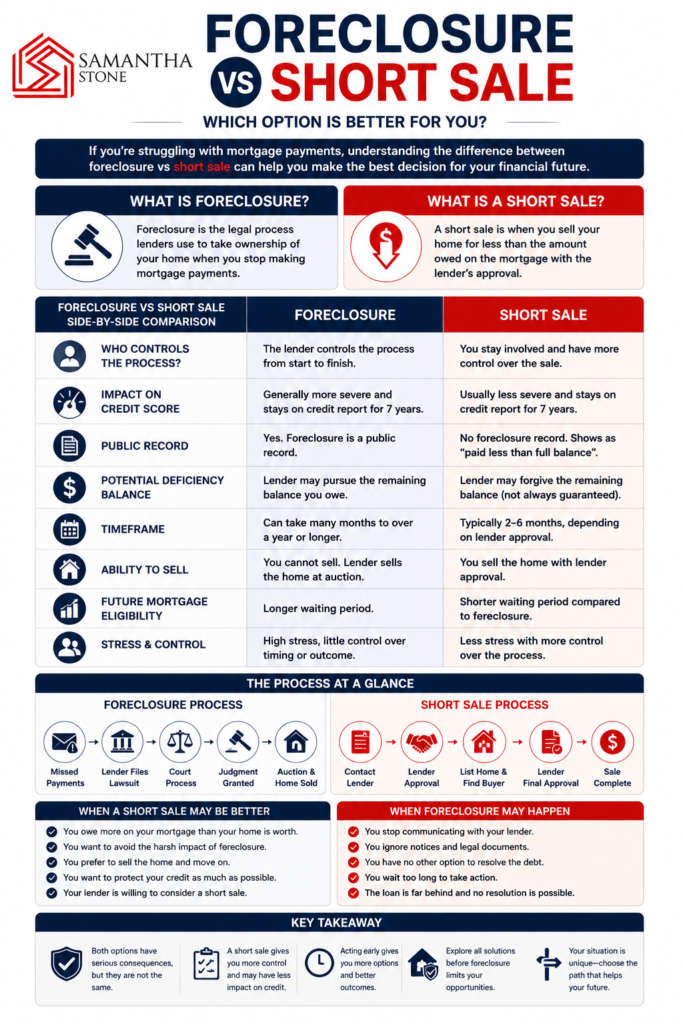
Foreclosure vs Short Sale: Key Differences
| Factor | Foreclosure | Short Sale |
|---|---|---|
| Who controls the sale? | Lender | Homeowner with lender approval |
| Credit impact | Generally more severe | Usually less severe |
| Public record | Yes | Typically no foreclosure record |
| Ability to negotiate | Limited | More flexibility |
| Homeowner involvement | Minimal | Active participation |
| Future mortgage eligibility | Longer waiting period | Often shorter waiting period |
| Property marketing | No | Yes |
This comparison helps explain why many homeowners prefer exploring a short sale before foreclosure becomes unavoidable.
Which Option Has a Greater Impact on Your Credit?
One of the most common concerns when comparing foreclosure vs short sale is credit damage.
Foreclosure often has a significant negative impact on credit scores because it demonstrates a complete failure to meet mortgage obligations.
A short sale may also affect credit, but in many cases the impact is less severe than a completed foreclosure.
Credit outcomes vary depending on:
- Payment history
- Existing debt
- Credit profile
- Lender reporting practices
For homeowners focused on rebuilding financially, this difference can be important.
Which Option Gives You More Control?
Control is another major difference between foreclosure vs short sale.
With foreclosure, the lender largely controls the process.
The lender determines timelines and ultimately takes possession of the property.
With a short sale, homeowners remain involved in:
- Marketing the property
- Reviewing offers
- Negotiating with buyers
- Working with lenders
Many homeowners appreciate having a greater role in the outcome rather than waiting for foreclosure proceedings to conclude.
Can You Sell Your House Before Foreclosure?
Yes.
One of the biggest misconceptions about foreclosure is that homeowners cannot sell once foreclosure proceedings begin.
In many cases, homeowners can still sell before foreclosure is finalized.
Depending on the circumstances, options may include:
- Traditional sale
- Short sale
- Cash sale
- Investor purchase
Selling before foreclosure often provides opportunities that may disappear later in the process.
When a Short Sale May Be the Better Option
A short sale may make sense when:
- The mortgage balance exceeds the property’s value.
- The homeowner cannot continue making payments.
- Foreclosure appears likely.
- The lender is willing to approve a short sale.
- The homeowner wants more control over the process.
Many distressed homeowners choose this path because it allows them to actively participate in resolving the situation.
When Foreclosure May Be Difficult to Avoid
Although many solutions exist, foreclosure may become difficult to avoid when:
- Mortgage payments have been missed for an extended period.
- The homeowner has no viable repayment plan.
- Property values have declined significantly.
- Financial hardship is severe and ongoing.
- Communication with the lender has been ignored.
Even then, homeowners should explore available options before assuming foreclosure is inevitable.
Foreclosure vs Short Sale in New York
New York’s judicial foreclosure process generally takes longer than foreclosure procedures in many other states.
This can provide homeowners with additional time to:
- Explore loan modifications
- Pursue short sales
- Sell the property
- Negotiate with lenders
However, waiting too long can reduce available options.
Homeowners facing foreclosure in New York often benefit from acting as early as possible.
Foreclosure vs Short Sale in New Jersey
New Jersey also uses a judicial foreclosure process.
This means lenders must follow court procedures before selling a property.
For homeowners considering foreclosure vs short sale, this additional time may create opportunities to:
- Preserve equity
- Negotiate alternatives
- Complete a property sale
- Avoid a foreclosure judgment
Understanding local foreclosure timelines can help homeowners make informed decisions.
How Much Equity Could You Lose Through Foreclosure?
One issue many homeowners overlook is the potential loss of equity.
When foreclosure occurs, homeowners generally lose control over the sale process.
A short sale or traditional sale may provide greater opportunities to evaluate available options before losing ownership.
This is one reason many homeowners explore alternatives before foreclosure progresses too far.
What Happens After a Foreclosure Sale?
After a foreclosure sale:
- Ownership transfers to the winning bidder or lender.
- The homeowner loses ownership rights.
- Eviction proceedings may follow.
- Credit consequences remain for years.
At this stage, options become significantly more limited.
This is why understanding foreclosure vs short sale early in the process is so important.
Common Mistakes Homeowners Make
Many homeowners unintentionally reduce their options by:
- Ignoring lender communications
- Missing legal notices
- Waiting too long to seek assistance
- Assuming foreclosure cannot be stopped
- Failing to understand property value
- Delaying discussions about a short sale
Taking action early often creates more opportunities and better outcomes.
How to Decide Between Foreclosure vs Short Sale
Every homeowner’s situation is different.
Factors that may influence your decision include:
- Mortgage balance
- Property value
- Financial hardship
- Credit concerns
- Long term housing goals
- Lender requirements
Evaluating these factors carefully can help determine which option aligns best with your circumstances.
Key Takeaways
- Foreclosure vs Short Sale is a common comparison for homeowners facing financial hardship.
- A short sale generally provides more control than foreclosure.
- Foreclosure often has a greater impact on credit.
- Homeowners may still be able to sell before foreclosure is completed.
- New York and New Jersey homeowners often have additional time because of judicial foreclosure procedures.
- Early action creates more opportunities to explore alternatives.
Frequently Asked Questions
Is a short sale better than foreclosure?
In many situations, homeowners prefer a short sale because it provides more control and may have less impact on credit.
Which hurts credit more, foreclosure or short sale?
Foreclosure often has a more severe impact on credit than a short sale, although outcomes vary by individual circumstances.
Can I do a short sale after foreclosure starts?
Yes. Many homeowners pursue short sales after foreclosure proceedings have already begun.
How long does a short sale take?
The timeline varies depending on lender approval, buyer interest, and property conditions.
Can I sell my house before foreclosure?
Yes. Many homeowners successfully sell their property before foreclosure is completed.
What happens after foreclosure?
Ownership transfers to the buyer or lender, and the homeowner loses ownership rights to the property.
Reddit Discussion
https://www.reddit.com/r/RealEstate
TikTok Resource
https://www.tiktok.com/tag/shortsale
Conclusion
When comparing Foreclosure vs Short Sale, most homeowners are not simply choosing between two real estate terms. They are trying to protect their financial future during a difficult time. While every situation is unique, a short sale often provides greater control, more flexibility, and the opportunity to address financial challenges before foreclosure is completed.
For homeowners in New York and New Jersey, understanding your options early can make a significant difference. Exploring available solutions before foreclosure progresses too far may help you protect your finances, reduce stress, and move forward with greater confidence.