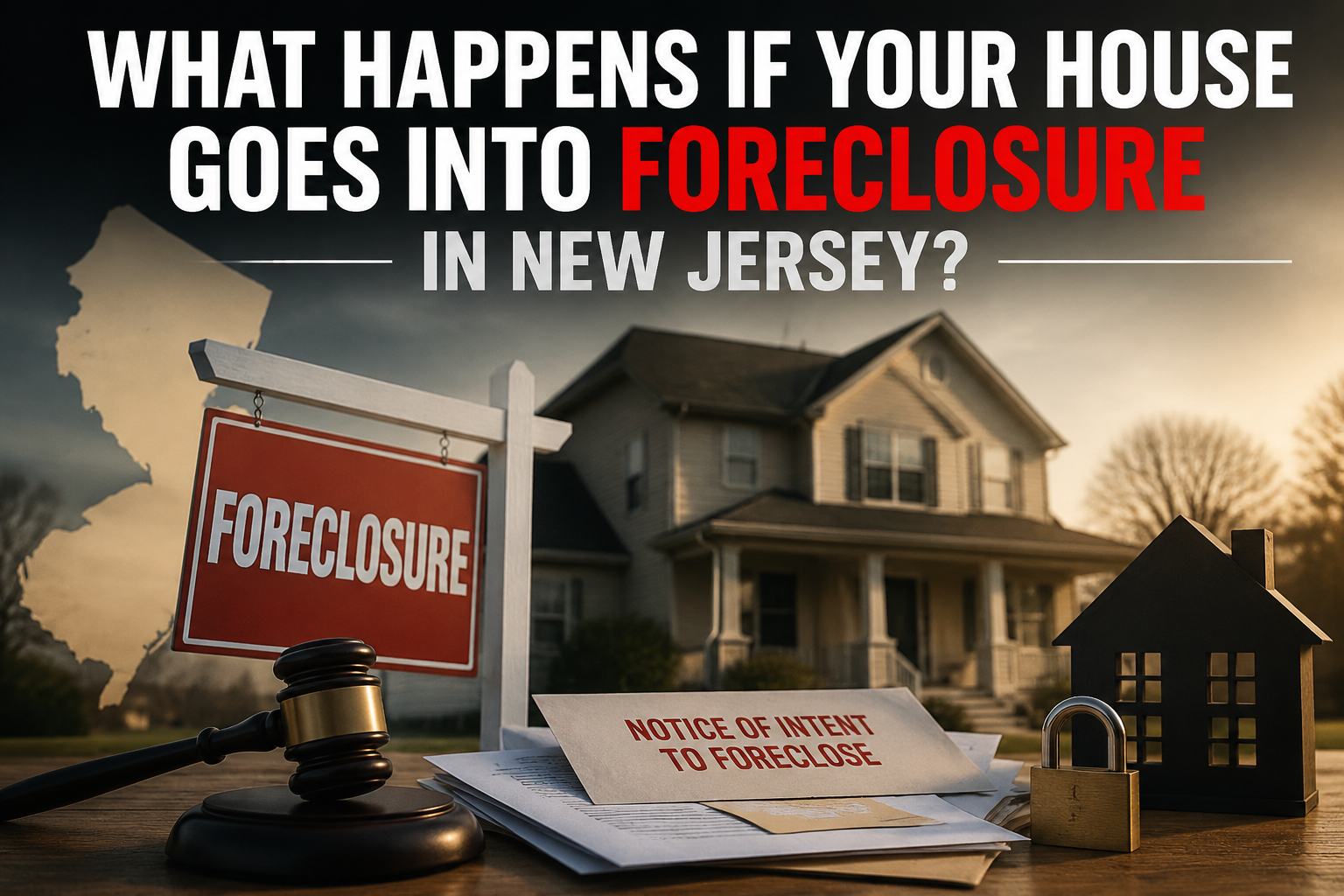
What happens if your house goes into foreclosure in New Jersey is one of the most common questions homeowners ask after falling behind on mortgage payments. Receiving notices from your lender can feel overwhelming, but understanding the foreclosure process is the first step toward making informed decisions.
Many homeowners assume that foreclosure means they immediately lose their home. In reality, New Jersey follows a judicial foreclosure process, which often provides homeowners with time to explore alternatives before a foreclosure sale occurs.
If you are worried about foreclosure, understanding what happens next can help you evaluate your options and potentially avoid costly mistakes.
What Happens If Your House Goes Into Foreclosure in New Jersey?
When a homeowner misses multiple mortgage payments, the lender may begin the foreclosure process to recover the outstanding loan balance.
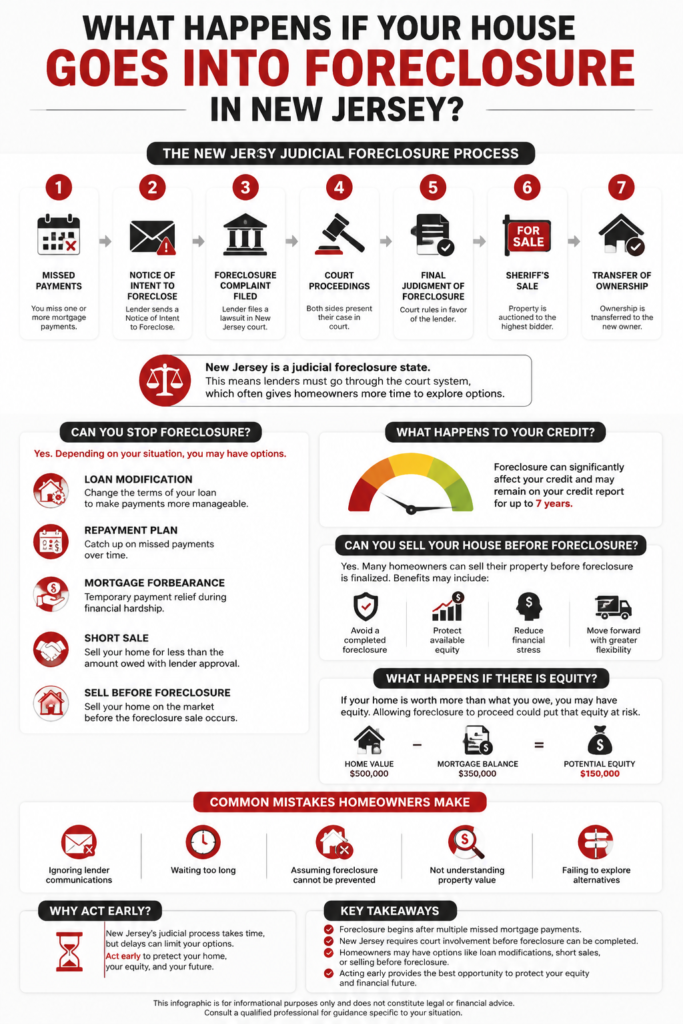
The foreclosure process generally follows several stages:
- Missed mortgage payments
- Notice of Intent to Foreclose
- Foreclosure complaint filed in court
- Court proceedings
- Final judgment of foreclosure
- Sheriff’s sale
- Transfer of ownership
Because New Jersey uses a judicial foreclosure process, lenders must go through the court system before a home can be sold through foreclosure.
This often gives homeowners additional time to explore foreclosure alternatives.
Missing Mortgage Payments
Foreclosure does not begin after a single missed payment.
Most lenders first attempt to contact homeowners regarding overdue payments.
During this period, homeowners may receive:
- Late notices
- Collection calls
- Letters from the lender
- Information regarding loss mitigation programs
The earlier homeowners communicate with their lender, the more potential solutions may be available.
Notice of Intent to Foreclose
Before filing a foreclosure lawsuit, lenders in New Jersey generally send a Notice of Intent to Foreclose.
This document informs homeowners that the loan is in default and provides information regarding the amount owed.
Receiving this notice is a serious warning sign, but it does not mean foreclosure is immediate.
Many homeowners still have opportunities to explore alternatives at this stage.
Foreclosure Complaint Filed in Court
If the default is not resolved, the lender may file a foreclosure complaint in court.
At this point, foreclosure becomes a legal matter.
Homeowners are served with legal documents and given an opportunity to respond.
Ignoring court documents can make the situation significantly more difficult.
Understanding your rights and available options during this stage is important.
Court Proceedings and Foreclosure Judgment
Because New Jersey is a judicial foreclosure state, the lender must obtain court approval before moving forward.
The court reviews the foreclosure case and determines whether the lender has the legal right to foreclose.
If the lender prevails, the court may issue a final judgment of foreclosure.
This allows the foreclosure process to move toward a sheriff’s sale.
Sheriff’s Sale
The sheriff’s sale is often the stage homeowners fear most.
During this process, the property is auctioned to the highest bidder.
Once the sale is completed, ownership of the property may transfer to another party.
However, depending on the circumstances, homeowners may still have options before the sale occurs.
This is why acting early is often critical.
Can You Stop Foreclosure in New Jersey?
One of the most important questions homeowners ask after learning what happens if your house goes into foreclosure in New Jersey is whether the process can be stopped.
In many situations, foreclosure alternatives may exist.
Potential options include:
Loan Modification
A loan modification changes the terms of the mortgage to make payments more manageable.
Repayment Plan
Some lenders may allow homeowners to catch up on missed payments over time.
Mortgage Forbearance
Temporary payment relief may be available in certain hardship situations.
Short Sale
A short sale allows a homeowner to sell the property with lender approval for less than the amount owed.
Selling Before Foreclosure
Many homeowners successfully sell their homes before a foreclosure sale occurs.
What Happens to Your Credit?
Foreclosure can significantly affect a homeowner’s credit profile.
The exact impact depends on several factors, including:
- Payment history
- Existing debt
- Credit score before foreclosure
- Other financial obligations
Because foreclosure may remain on a credit report for years, many homeowners explore alternatives before the process reaches completion.
Can You Sell Your House Before Foreclosure?
Yes.
Many homeowners are surprised to learn that they may be able to sell their property before foreclosure is finalized.
Selling before foreclosure may provide opportunities to:
- Avoid a completed foreclosure
- Protect available home equity
- Reduce financial stress
- Move forward with greater flexibility
The sooner homeowners evaluate their options, the more opportunities may be available.
What Happens If There Is Equity in the Home?
Home equity is often one of the most valuable assets homeowners possess.
If the property’s market value exceeds the mortgage balance, there may be equity available.
For example:
If a home is worth $500,000 and the mortgage balance is $350,000, the homeowner may have approximately $150,000 in equity before accounting for selling costs.
Allowing foreclosure to proceed without understanding available options may put that equity at risk.
Common Mistakes Homeowners Make During Foreclosure
Ignoring Lender Communications
Avoiding calls and letters often makes the situation worse.
Waiting Too Long
Delays may limit available solutions.
Assuming Foreclosure Cannot Be Prevented
Many homeowners still have alternatives available during various stages of foreclosure.
Not Understanding Property Value
Knowing the home’s current market value can be important when evaluating options.
Failing to Explore Alternatives
Foreclosure is not always the only path forward.
Why New Jersey Homeowners Should Act Early
Because New Jersey follows a judicial foreclosure process, homeowners often have more time than they realize.
However, time does not last forever.
The earlier homeowners understand what happens if your house goes into foreclosure in New Jersey, the better positioned they may be to evaluate available solutions and make informed decisions.
Key Takeaways
- What happens if your house goes into foreclosure in New Jersey depends on where you are in the foreclosure process.
- Foreclosure generally begins after multiple missed mortgage payments.
- New Jersey requires lenders to use the court system before foreclosure can be completed.
- Homeowners may have opportunities to explore alternatives such as loan modifications, repayment plans, short sales, or selling before foreclosure.
- Acting early often provides the greatest flexibility.
Frequently Asked Questions
What happens if your house goes into foreclosure in New Jersey?
The lender may begin a judicial foreclosure process that includes court proceedings and potentially a sheriff’s sale.
Can I stop foreclosure in New Jersey?
Depending on your circumstances, options such as loan modifications, repayment plans, short sales, and selling before foreclosure may be available.
How long does foreclosure take in New Jersey?
Timelines vary, but New Jersey’s judicial foreclosure process often takes longer than non judicial foreclosure states.
Can I sell my house during foreclosure?
Many homeowners can sell their property before a foreclosure sale occurs.
What is a sheriff’s sale?
A sheriff’s sale is a public auction where a foreclosed property may be sold to the highest bidder.
Reddit Discussion
https://www.reddit.com/r/RealEstate
TikTok Resource
https://www.tiktok.com/tag/foreclosure
Conclusion
Understanding what happens if your house goes into foreclosure in New Jersey is essential for homeowners facing financial hardship. While foreclosure is a serious situation, it does not necessarily mean all options are gone. New Jersey homeowners often have opportunities to explore alternatives before a foreclosure sale occurs. Taking action early and understanding the foreclosure process can help homeowners make informed decisions about their future.
What Happens If Your House Goes Into Foreclosure in New Jersey?What Happens If Your House Goes Into Foreclosure in New Jersey?What Happens If Your House Goes Into Foreclosure in New Jersey?What Happens If Your House Goes Into Foreclosure in New Jersey?What Happens If Your House Goes Into Foreclosure in New Jersey?What Happens If Your House Goes Into Foreclosure in New Jersey?What Happens If Your House Goes Into Foreclosure in New Jersey?What Happens If Your House Goes Into Foreclosure in New Jersey?