
Loan modification is one of the most common solutions homeowners explore when they are struggling to keep up with mortgage payments. Financial hardships can happen unexpectedly. A job loss, medical emergency, divorce, rising living expenses, or other challenges can make it difficult to stay current on your mortgage.
Many homeowners believe foreclosure is unavoidable once they fall behind on payments. In reality, there may be options available before foreclosure becomes the final outcome. One of those options is a loan modification.
For homeowners in New York and New Jersey, understanding how a loan modification works could be the first step toward protecting their home and improving their financial situation.
What Is a Loan Modification?
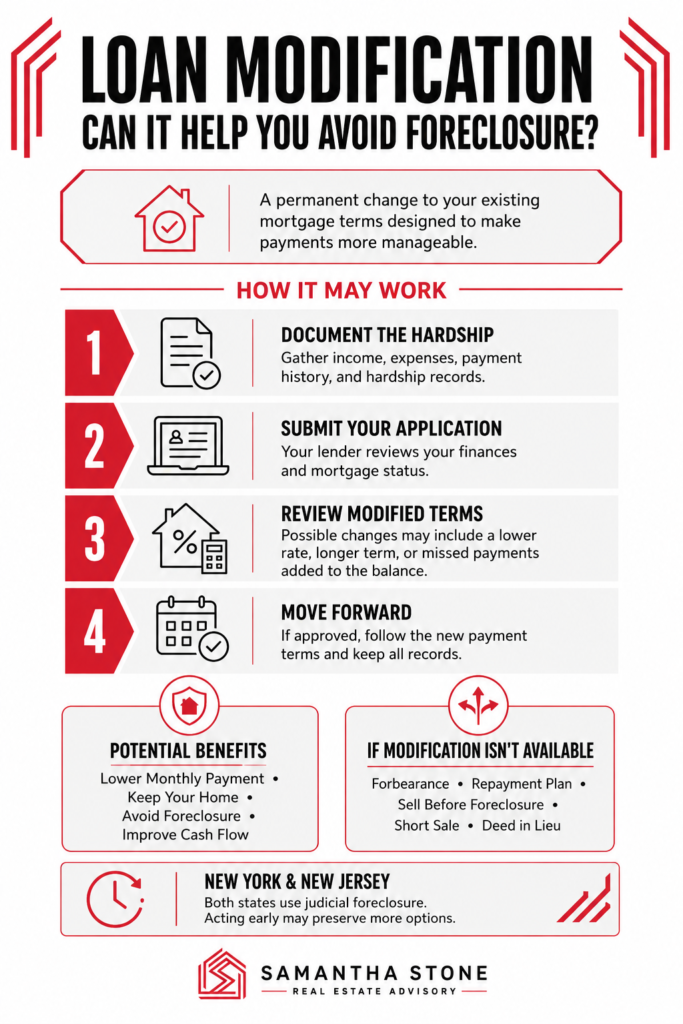
A loan modification is a permanent change to the terms of an existing mortgage loan. The goal is to make monthly payments more affordable for homeowners experiencing financial hardship.
Unlike refinancing, a loan modification does not replace your existing mortgage with a new loan. Instead, the lender adjusts certain terms of the current mortgage to help create a payment that is easier to manage.
A loan modification may include:
- Lowering the interest rate
- Extending the loan term
- Adding missed payments to the loan balance
- Adjusting monthly payment amounts
- Changing certain loan conditions
The exact modifications depend on the lender, loan type, and homeowner’s financial circumstances.
How Does a Loan Modification Work?
When a homeowner applies for a loan modification, the lender reviews their financial situation to determine whether changes to the loan terms may be appropriate.
Lenders typically evaluate:
- Income
- Monthly expenses
- Mortgage payment history
- Financial hardship documentation
- Current mortgage balance
If approved, the lender may offer modified loan terms designed to make payments more manageable.
Because every situation is different, there is no single loan modification program that applies to everyone.
Can a Loan Modification Stop Foreclosure?
In many situations, a loan modification may help prevent foreclosure by creating a more affordable payment structure.
Homeowners who take action early often have more options available than those who wait until foreclosure proceedings have advanced.
While approval is never guaranteed, exploring a loan modification may provide an opportunity to remain in the home and regain financial stability.
Who May Qualify for a Loan Modification?
Eligibility requirements vary by lender and loan program.
- Are experiencing financial hardship
- Have difficulty making current mortgage payments
- Can demonstrate sufficient income to support modified payments
- Provide required financial documentation
Common hardships include:
Job Loss
A reduction in household income can quickly make mortgage payments unaffordable.
Medical Expenses
Unexpected healthcare costs often create significant financial pressure.
Divorce or Separation
Changes in household income frequently impact mortgage affordability.
Increased Living Expenses
Rising costs for insurance, utilities, taxes, and daily living expenses can make it harder to keep up with mortgage obligations.
Benefits of a Loan Modification
Many homeowners pursue a loan modification because of the potential advantages it may provide.
Lower Monthly Payments
Reducing monthly mortgage obligations can make homeownership more manageable.
Foreclosure Prevention
A successful loan modification may help homeowners avoid foreclosure proceedings.
Long Term Financial Stability
Modified loan terms may improve household cash flow and reduce financial stress.
Retaining Homeownership
For many homeowners, remaining in the home is the primary goal.
Approval Is Not Guaranteed
Lenders evaluate applications carefully and not all requests are approved.
Documentation Requirements
The application process often requires extensive financial documentation.
Processing Delays
Review periods may take time depending on lender workload and individual circumstances.
Alternative Solutions May Be Needed
In some situations, other foreclosure prevention strategies may be more appropriate.
Refinancing
- Replaces the current mortgage with a new loan
- Often requires stronger credit and income qualifications
- May offer different interest rates and loan terms
Understanding the difference can help homeowners evaluate which option may be more suitable.
Alternatives to a Loan Modification
If a loan modification is not available, homeowners may still have options.
Mortgage Forbearance
Temporary reduction or suspension of mortgage payments during financial hardship.
Repayment Plans
Structured plans that allow homeowners to catch up on missed payments over time.
Selling Before Foreclosure
Some homeowners choose to sell the property before foreclosure progresses further.
Short Sale
A lender approved sale for less than the amount owed on the mortgage.
Deed in Lieu of Foreclosure
Transferring ownership of the property to the lender to avoid foreclosure.
Homeowners in New York and New Jersey often face unique housing costs, property taxes, and financial pressures.
Because both states use judicial foreclosure processes, homeowners may have opportunities to explore foreclosure alternatives before a foreclosure sale occurs.
A loan modification is often one of the first options homeowners investigate when seeking to protect their home and regain financial control.
Understanding available solutions early can make a significant difference in the outcome.
Signs You Should Explore a Loan Modification
You may want to consider a loan modification if:
- Mortgage payments have become difficult to afford
- You have experienced a financial hardship
- You are behind on mortgage payments
- Foreclosure notices have been received
- You want to remain in your home
- Other foreclosure prevention options are being evaluated
The earlier homeowners seek solutions, the greater the likelihood of identifying available options.
Common Mistakes Homeowners Make
Waiting Too Long
Delaying action often limits available solutions.
Ignoring Lender Communications
Important information regarding available programs may be missed.
Failing to Gather Documentation
Financial records are typically required during the review process.
Assuming Foreclosure Is Inevitable
Many homeowners have options available before foreclosure is completed.
Why Early Action Matters
One of the most important lessons homeowners learn is that timing matters.
The sooner financial difficulties are addressed, the more opportunities may be available.
Waiting until foreclosure deadlines approach can reduce flexibility and increase stress.
Exploring a loan modification early may provide additional time to evaluate options and develop a strategy that aligns with long term financial goals.
External Resources
Reddit Discussion:
https://www.reddit.com/r/RealEstate/
Consumer Financial Protection Bureau:
https://www.consumerfinance.gov/
HUD Housing Counseling:
https://www.hud.gov/
Conclusion
Loan modification can be an important tool for homeowners facing financial hardship and seeking alternatives to foreclosure. By adjusting mortgage terms and creating more affordable payments, a loan modification may help homeowners remain in their homes while improving financial stability. For homeowners in New York and New Jersey, understanding available options early can make a significant difference in protecting both their property and their financial future.