

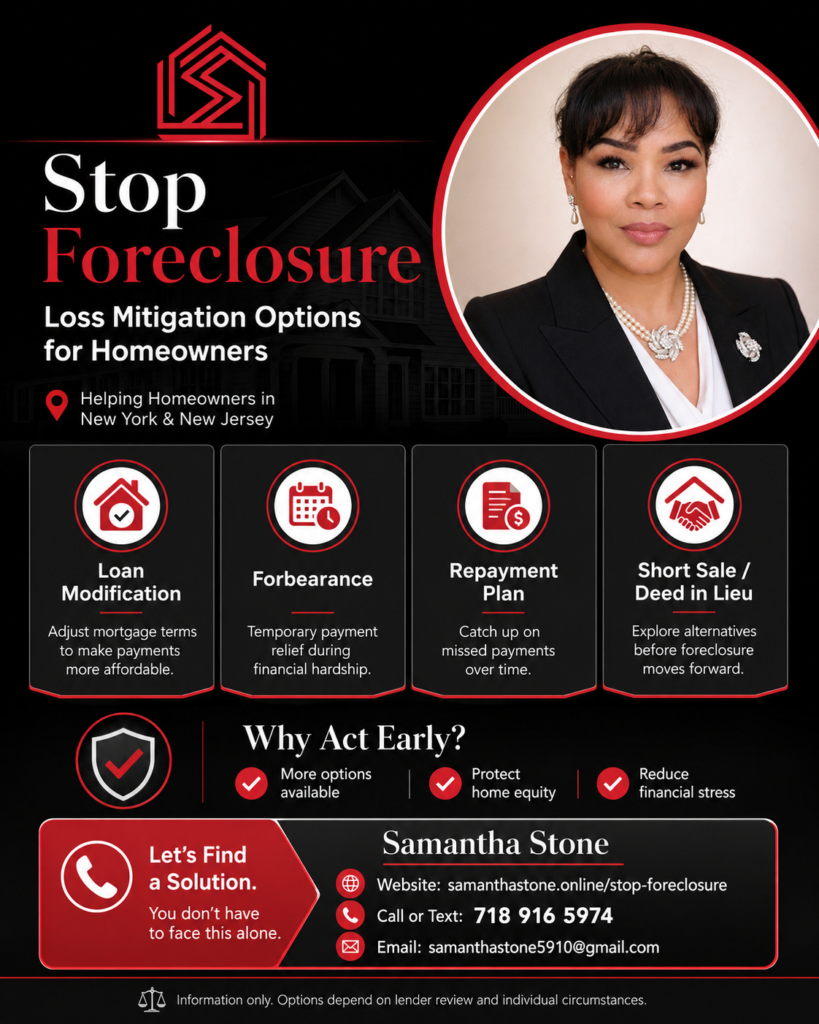
Loss mitigation is one of the most important terms homeowners should understand when facing financial hardship. If you have fallen behind on your mortgage payments or believe you may struggle to make future payments, learning about loss mitigation could help you explore solutions before foreclosure becomes unavoidable.
Many homeowners assume that once they miss mortgage payments, they have no choice but to lose their home. In reality, lenders often have programs designed to help borrowers who are experiencing genuine financial hardship. These programs fall under the category of loss mitigation and may provide opportunities to avoid foreclosure while improving long term financial stability.
For homeowners throughout New York and New Jersey, taking action early can create more options and provide greater flexibility during a difficult financial situation.
What Is Loss Mitigation?
Loss mitigation refers to the process lenders use to help homeowners who are unable to keep up with their mortgage payments. Rather than immediately moving toward foreclosure, lenders may review a homeowner’s financial circumstances and determine whether alternative solutions are available.
The purpose of loss mitigation is to reduce financial losses for both the lender and the homeowner.
Depending on the situation, available options may include:
- Loan modification
- Mortgage forbearance
- Repayment plans
- Short sale
- Deed in lieu of foreclosure
- Selling the property before foreclosure
- Other lender approved solutions
Every homeowner’s financial situation is different, so the most appropriate solution depends on income, expenses, mortgage balance, and long term goals.
Why Loss Mitigation Matters
Many homeowners wait until foreclosure proceedings have already begun before seeking help. Unfortunately, waiting often limits the number of available options.
Exploring loss mitigation early may help homeowners:
- Avoid foreclosure
- Protect available home equity
- Reduce financial stress
- Create affordable payment solutions
- Preserve future borrowing opportunities
- Gain additional time to evaluate available choices
Taking action before legal deadlines become urgent often results in more flexibility.
How the Loss Mitigation Process Works
The loss mitigation process generally begins when a homeowner contacts the mortgage lender after experiencing financial hardship.
The lender typically reviews documentation such as:
- Income verification
- Monthly expenses
- Bank statements
- Tax returns
- Hardship explanation
- Mortgage information
After reviewing the information, the lender determines which options may be appropriate.
Because every loan and every homeowner is different, there is no single solution that applies to everyone.
Common Loss Mitigation Options
Loan Modification
A loan modification permanently changes certain terms of the existing mortgage.
Possible changes include:
- Lower interest rates
- Extended repayment periods
- Reduced monthly payments
- Addition of overdue amounts to the loan balance
Many homeowners consider this option when they want to remain in their home.
Mortgage Forbearance
Forbearance temporarily reduces or pauses mortgage payments during periods of financial hardship.
This solution may benefit homeowners experiencing temporary setbacks such as:
- Job loss
- Medical emergencies
- Temporary disability
- Family hardship
Once the forbearance period ends, repayment arrangements are typically required.
Repayment Plan
A repayment plan allows homeowners to gradually catch up on missed mortgage payments while continuing regular monthly payments.
This option may be suitable for homeowners whose financial hardship has improved.
Short Sale
If the property is worth less than the mortgage balance, a lender may approve a short sale.
A short sale allows the property to be sold for less than the remaining loan amount while potentially avoiding foreclosure.
Deed in Lieu of Foreclosure
Some homeowners choose to voluntarily transfer ownership of the property to the lender.
Although this option is not appropriate for everyone, it may provide an alternative to foreclosure in certain circumstances.
Who May Qualify for Loss Mitigation?
Eligibility depends on several factors, including:
- Financial hardship
- Mortgage status
- Income
- Ability to support modified payments
- Lender guidelines
Examples of financial hardship include:
Job Loss
Reduced household income often creates difficulty maintaining mortgage payments.
Medical Expenses
Unexpected healthcare costs can quickly strain household finances.
Divorce or Separation
Changes in household income frequently affect mortgage affordability.
Increased Cost of Living
Higher insurance premiums, property taxes, and everyday living expenses may contribute to financial hardship.
Benefits of Loss Mitigation
Potential benefits include:
Avoiding Foreclosure
Many homeowners successfully resolve mortgage issues through lender approved alternatives.
Protecting Home Equity
Selling before foreclosure or modifying loan terms may help preserve equity.
Lower Monthly Payments
Certain programs are designed to improve affordability.
More Time to Evaluate Options
Working with the lender early may create additional flexibility.
Reduced Financial Stress
Knowing that solutions may exist often helps homeowners regain confidence during uncertain times.
Common Mistakes Homeowners Make
Ignoring Lender Letters
Many homeowners avoid opening correspondence because they fear bad news.
Those letters often contain important information regarding available options.
Waiting Too Long
The longer homeowners delay seeking assistance, the fewer solutions may remain available.
Assuming Foreclosure Is Automatic
Missing payments does not always mean foreclosure is unavoidable.
Failing to Understand Home Equity
Knowing your property’s market value can significantly influence available strategies.
Loss Mitigation in New York and New Jersey
Homeowners in New York and New Jersey often face higher housing costs than many other parts of the country.
Acting early provides the greatest opportunity to review available alternatives and develop a strategy based on your individual financial situation.
When Should You Apply for Loss Mitigation?
- Have missed mortgage payments
- Expect future payment difficulties
- Have experienced financial hardship
- Received foreclosure notices
- Want to remain in their home
- Want to explore alternatives before foreclosure advances
The sooner homeowners begin the process, the greater the likelihood of identifying workable solutions.
Related Resources
You may also find these articles helpful:
- Loan Modification
- Foreclosure Prevention
- Can Bankruptcy Stop Foreclosure?
- Can I Sell My House Before Foreclosure?
- Foreclosure vs Short Sale
- Distressed Asset Advisory Services
Frequently Asked Questions
What is loss mitigation?
Loss mitigation is the process lenders use to help homeowners experiencing financial hardship by offering alternatives to foreclosure.
Does loss mitigation stop foreclosure?
Depending on the homeowner’s circumstances and lender approval, loss mitigation may delay or prevent foreclosure while alternative solutions are reviewed.
Is loan modification part of loss mitigation?
Yes. Loan modification is one of the most common loss mitigation options available to qualified homeowners.
Who qualifies for loss mitigation?
Qualification depends on financial hardship, mortgage status, income, and lender requirements.
Can I apply for loss mitigation after missing mortgage payments?
Yes. Many homeowners begin the loss mitigation process after experiencing payment difficulties.
How long does the loss mitigation process take?
The timeline varies depending on the lender, documentation provided, and the specific solution being considered.
External Resources
Reddit Discussion
https://www.reddit.com/r/RealEstate
Consumer Financial Protection Bureau
https://www.consumerfinance.gov
HUD Housing Counseling
Conclusion
Loss mitigation gives homeowners an opportunity to explore alternatives before foreclosure becomes the final outcome. Whether through a loan modification, repayment plan, mortgage forbearance, short sale, or another solution, taking action early can make a significant difference. If you are experiencing financial hardship in New York or New Jersey, understanding your loss mitigation options may help you protect your home, preserve valuable equity, and make informed decisions about your future.



One Response