
Mortgage delinquency is often the first warning sign that a homeowner is facing serious financial challenges. Missing one or more mortgage payments does not automatically mean you will lose your home, but it does signal that action should be taken as soon as possible.
For many homeowners in New York and New Jersey, financial hardship can happen without warning. A job loss, medical emergency, divorce, reduced income, or rising household expenses can make it difficult to keep up with monthly mortgage payments. Understanding mortgage delinquency and responding early may help you avoid foreclosure and preserve your financial future.
What Is Mortgage Delinquency?
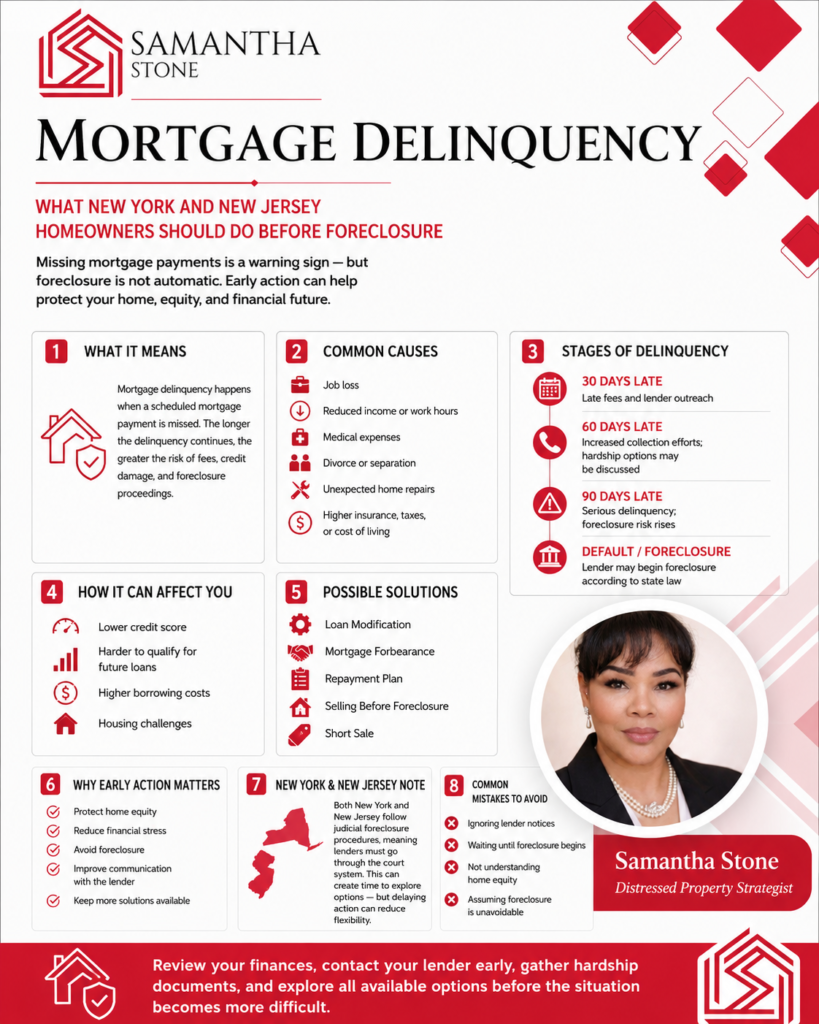
Mortgage delinquency occurs when a homeowner fails to make a scheduled mortgage payment by the due date. Once a payment is missed, the loan becomes delinquent until the overdue amount is paid or another arrangement is made with the lender.
The longer a loan remains delinquent, the greater the risk of additional fees, damage to your credit, and foreclosure proceedings.
Understanding where you stand can help you make informed decisions before the situation becomes more difficult.
How Mortgage Delinquency Happens
A mortgage delinquency can happen for many reasons, and it is not always the result of poor financial planning.
Common causes include:
- Job loss
- Reduced work hours
- Medical expenses
- Divorce or separation
- Unexpected home repairs
- Increased insurance premiums
- Rising property taxes
- Higher cost of living
Many homeowners experience temporary setbacks that affect their ability to make mortgage payments on time.
Stages of Mortgage Delinquency
Understanding the stages of mortgage delinquency can help homeowners know what to expect.
Thirty Days Late
The first missed payment usually results in late fees and communication from the lender.
Sixty Days Late
If payments continue to be missed, lenders typically increase collection efforts and may discuss available hardship programs.
Ninety Days Late
At this stage, the loan is considered seriously delinquent. The risk of foreclosure increases significantly if no solution is found.
Default and Foreclosure
If the delinquency continues, the lender may begin the foreclosure process according to state law.
How Mortgage Delinquency Affects Your Credit
A prolonged mortgage delinquency can negatively affect your credit profile.
Potential consequences include:
- Lower credit scores
- Difficulty qualifying for future loans
- Higher borrowing costs
- Challenges obtaining new housing
Taking action early may reduce some of the long term financial impact.
Can Mortgage Delinquency Lead to Foreclosure?
Yes.
If a mortgage delinquency is not resolved, the lender may eventually begin foreclosure proceedings.
However, foreclosure is not automatic.
Many homeowners have opportunities to explore alternatives before reaching that stage.
Options Available During Mortgage Delinquency
Homeowners experiencing mortgage delinquency may have several possible solutions.
Loan Modification
A loan modification may permanently change the terms of the mortgage to create more affordable monthly payments.
Mortgage Forbearance
Forbearance may temporarily reduce or pause mortgage payments during financial hardship.
Repayment Plan
Some lenders allow homeowners to catch up on missed payments over time while continuing regular monthly payments.
Selling Before Foreclosure
If keeping the property is no longer practical, selling before foreclosure may allow homeowners to preserve equity and avoid a completed foreclosure.
Short Sale
If the mortgage balance exceeds the home’s value, a lender approved short sale may be an alternative.
Why Early Action Matters
One of the biggest mistakes homeowners make during mortgage delinquency is waiting too long.
Acting early may provide opportunities to:
- Protect home equity
- Reduce financial stress
- Avoid foreclosure
- Improve communication with the lender
- Explore more available solutions
The sooner homeowners seek assistance, the greater the flexibility they often have.
Mortgage Delinquency in New York and New Jersey
Homeowners in New York and New Jersey face unique financial challenges due to housing costs, property taxes, and other living expenses.
Both states follow judicial foreclosure procedures, meaning lenders must go through the court system before completing a foreclosure.
This process often gives homeowners time to evaluate alternatives, but delaying action can reduce those opportunities.
Common Mistakes Homeowners Make
Ignoring Lender Communications
Important notices often include information about available assistance programs.
Waiting Until Foreclosure Begins
Solutions are generally easier to pursue before legal proceedings advance.
Not Understanding Home Equity
Knowing your home’s value can influence which options may be available.
Assuming Foreclosure Is Unavoidable
Many homeowners have alternatives that may help them avoid foreclosure.
How to Respond to Mortgage Delinquency
If you are experiencing mortgage delinquency, consider taking these steps:
- Review your financial situation.
- Contact your lender as soon as possible.
- Gather income and hardship documentation.
- Explore loan modification and other assistance programs.
- Understand your home’s current market value.
- Evaluate all available foreclosure alternatives.
Related Resources
- Foreclosure Prevention
- Loan Modification
- Loss Mitigation
- Mortgage Hardship
- Can Bankruptcy Stop Foreclosure?
- Can I Sell My House Before Foreclosure?
External Resources
Reddit Discussion
https://www.reddit.com/r/RealEstate
Consumer Financial Protection Bureau
https://www.consumerfinance.gov
HUD Housing Counseling
Conclusion
Mortgage delinquency should never be ignored, but it also does not automatically mean foreclosure is inevitable. By understanding the causes, recognizing the warning signs, and exploring available solutions early, homeowners in New York and New Jersey may be able to protect their home, preserve valuable equity, and regain financial stability. Acting early often provides the best opportunity to find a solution that fits your financial goals.