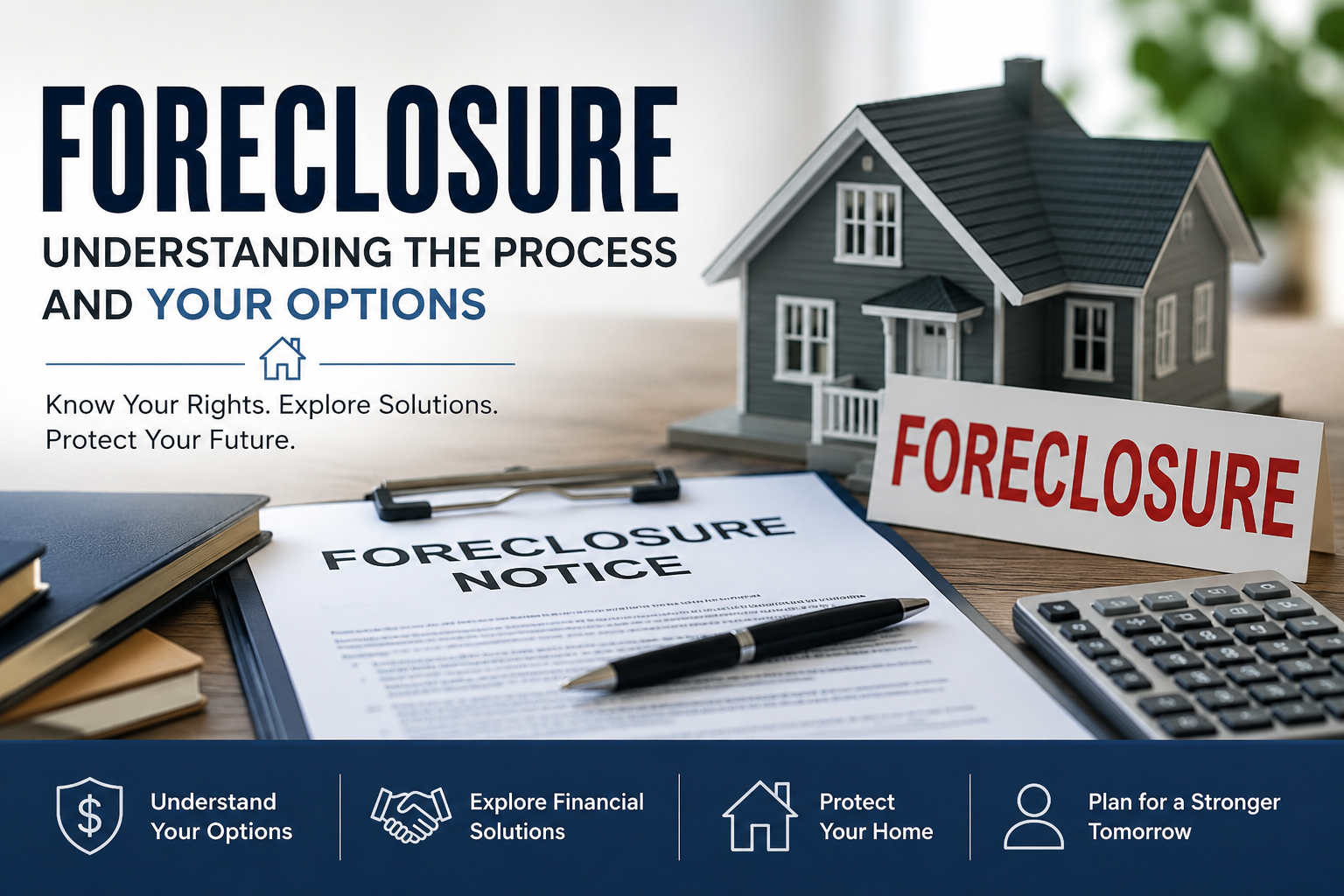
Foreclosure is one of the most stressful financial situations a homeowner can face. Missing mortgage payments, rising debt, job loss, or unexpected financial hardship can place individuals and families at risk of losing their homes. Understanding how foreclosure works and knowing the available options can help homeowners make informed decisions during difficult times.
Many people feel overwhelmed when facing foreclosure, but there are strategies and resources that may help reduce financial damage and create a path toward recovery.
What Is Foreclosure?
Foreclosure is a legal process that allows a lender to take ownership of a property when a homeowner fails to make mortgage payments as agreed. Once the loan falls into serious default, the lender may begin foreclosure proceedings to recover the remaining debt.
The foreclosure process can vary depending on state laws and mortgage agreements, but it generally begins after several missed payments.
Common Causes of Foreclosure
Homeowners may experience foreclosure for many different reasons, including:
- Job loss or reduced income
- Medical expenses
- Divorce or family changes
- Unexpected financial emergencies
- Rising debt obligations
- Adjustable mortgage rate increases
- Poor financial planning
Financial hardship can happen unexpectedly, making it important for homeowners to seek assistance early.
Stages of the Foreclosure Process
Missed Mortgage Payments
Foreclosure usually begins after multiple missed mortgage payments. Lenders often contact homeowners during this stage to discuss repayment options or hardship assistance.
Notice of Default
If payments continue to be missed, the lender may issue a formal notice of default. This document informs the homeowner that the loan is in serious delinquency.
Pre Foreclosure
During pre foreclosure, homeowners may still have opportunities to resolve the issue through loan modifications, repayment plans, refinancing, or selling the property.
Foreclosure Sale
If the debt is not resolved, the property may be sold through a foreclosure auction or public sale.
Property Ownership Transfer
Once the foreclosure sale is completed, ownership of the property transfers to the lender or the new buyer.
How Foreclosure Affects Homeowners
Foreclosure can create long term financial consequences, including:
- Significant credit score damage
- Difficulty qualifying for future loans
- Emotional stress and uncertainty
- Loss of home equity
- Challenges securing future housing
Understanding these risks encourages homeowners to explore available solutions before the process advances.
Options to Help Avoid Foreclosure
Loan Modification
Some lenders offer loan modifications that adjust mortgage terms to make payments more manageable.
Refinancing
Refinancing may help homeowners secure lower monthly payments or better loan conditions if they still qualify financially.
Repayment Plans
Lenders sometimes provide repayment agreements that allow missed payments to be caught up gradually.
Selling the Property
Selling a home before foreclosure may help reduce financial damage and preserve remaining equity.
Financial Counseling
Housing counselors and financial advisors can help homeowners understand available assistance programs and develop financial recovery plans.
The Importance of Early Action
One of the biggest mistakes homeowners make is waiting too long to seek help. Early communication with lenders and financial professionals can increase the chances of finding workable solutions before foreclosure progresses further.
Ignoring notices or avoiding conversations with lenders often makes the situation more difficult.
Final Thoughts
Foreclosure can feel overwhelming, but homeowners are not without options. Understanding the foreclosure process, exploring financial assistance, and seeking professional guidance early can help reduce stress and improve the chances of protecting long term financial stability.
By taking proactive steps and learning about available solutions, individuals facing foreclosure can make informed decisions and work toward rebuilding their financial future.