When does foreclosure become unstoppable is a frequent inquiry from homeowners after receiving notifications from their mortgage provider. If you’ve fallen behind on your mortgage payments, you might feel like you’ve exhausted all possibilities. In reality, numerous homeowners in New York and New Jersey still possess opportunities to bypass foreclosure, even once the proceedings have commenced.
The crucial aspect is grasping your position within the foreclosure timeline and taking swift action. Delaying too long can diminish your choices, but there are circumstances where foreclosure can still be halted shortly before a scheduled property sale.
For homeowners experiencing financial difficulties, comprehending when foreclosure becomes unstoppable can aid in avoiding costly errors and offer a clearer path forward.
What Constitutes Foreclosure?
Foreclosure is the formal legal procedure lenders employ to reclaim the outstanding balance of a mortgage when a borrower ceases making payments. If the situation isn’t remedied, the lender may ultimately sell the property to recoup the debt.
Both New York and New Jersey utilize judicial foreclosure systems. This implies that lenders must initiate a lawsuit and secure court approval before selling a property. While this process often extends beyond non judicial foreclosure states, homeowners should never assume they have an unlimited timeframe.
Understanding the mechanics of foreclosure is the initial step toward recognizing when intervention is still feasible.
When Does Foreclosure Become Unstoppable?
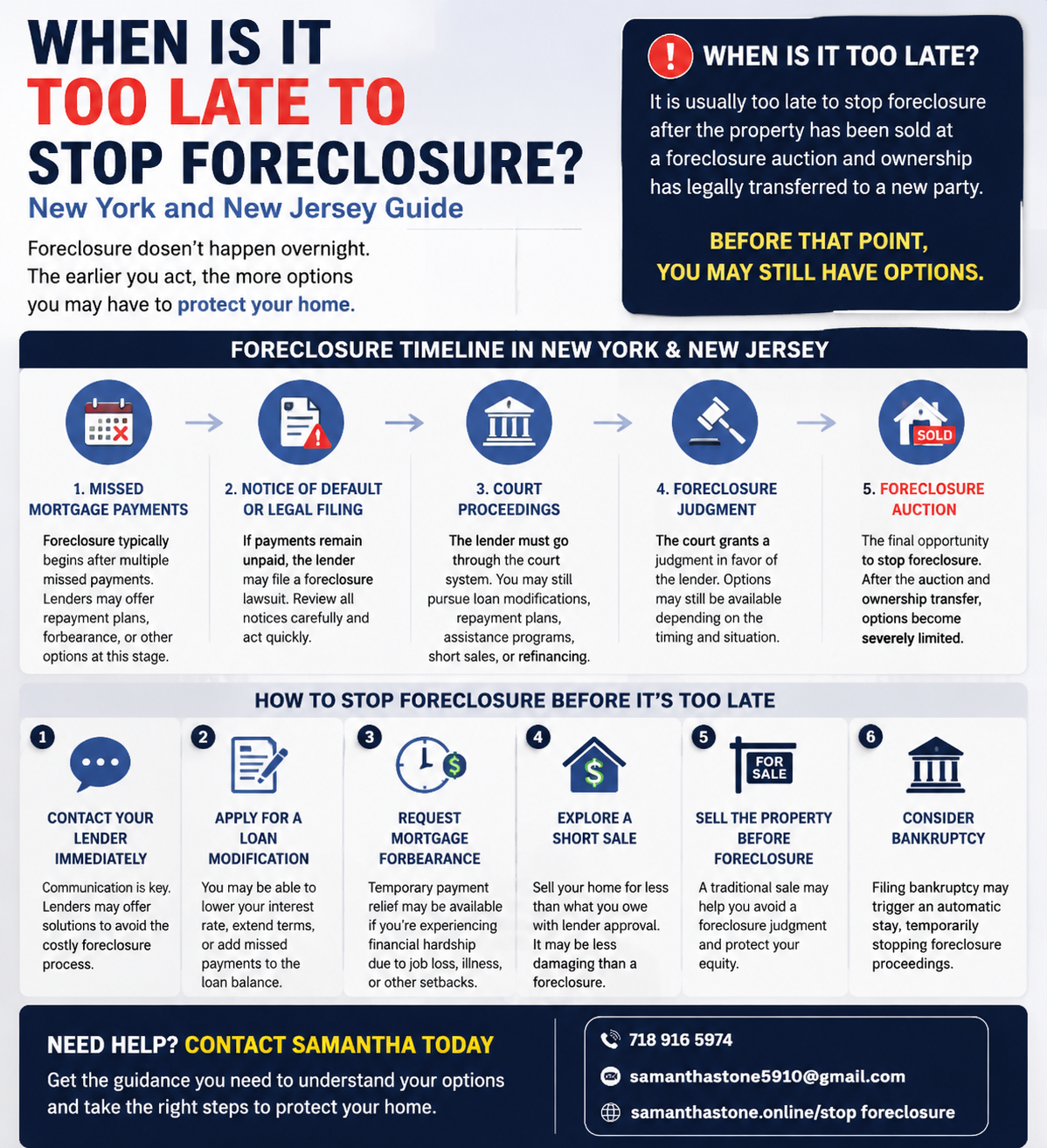
The straightforward response is that it is typically too late to halt foreclosure once the property has been sold at a foreclosure auction and legal ownership has been transferred to a new entity.
Prior to that juncture, homeowners frequently have options at their disposal.
Many individuals mistakenly believe foreclosure becomes inevitable after receiving the initial legal notice. In practice, lenders and courts may offer several chances to explore alternatives throughout the process.
The sooner you act, the more solutions may be accessible.
The Foreclosure Timeline in New York and New Jersey
Understanding the foreclosure timeline helps answer the question, when does foreclosure become unstoppable.
Missed Mortgage Payments
Foreclosure generally commences after multiple missed mortgage payments.
Most lenders endeavor to contact borrowers before initiating legal action. During this phase, homeowners may still be eligible for repayment plans, forbearance agreements, or loan modifications.
Notice of Default or Legal Filing
If payments remain outstanding, the lender may initiate formal foreclosure proceedings.
This stage often serves as a warning that prompt action is required. Homeowners should carefully review all notices and respond without delay.
Court Proceedings
Given that New York and New Jersey are judicial foreclosure states, lenders are obligated to navigate the court system.
During this period, homeowners may still pursue several options, including:
- Loan modifications
- Repayment plans
- Mortgage assistance programs
- Short sales
- Refinancing
Foreclosure Judgment
Once the court issues a foreclosure judgment, the situation becomes more critical.
However, homeowners may still have recourse available depending on the specific circumstances and timing.
Foreclosure Auction
The foreclosure auction is frequently the last chance to prevent the loss of the property.
Some homeowners can halt foreclosure shortly before an auction through:
- Mortgage reinstatement
- Bankruptcy filing
- An approved loan modification
- Selling the property
After the auction concludes and ownership changes hands, the available options become considerably more constrained.
How to Halt Foreclosure Before It’s Too Late
Many homeowners searching for when foreclosure becomes unstoppable are actually asking what steps they can take right now.
Contact Your Lender Immediately
Communication is one of the most potent tools available.
Many lenders prefer alternatives to foreclosure as the process is costly and time consuming.
Discussing hardship options early on can unlock solutions that might not be accessible later.
Apply for a Loan Modification
Loan modifications can assist homeowners in reducing their monthly mortgage payments and avoiding foreclosure.
Depending on the lender, a loan modification may include:
- Reduced interest rates
- Extended repayment periods
- Incorporating missed payments into the loan balance
Request Mortgage Forbearance
Forbearance can offer temporary payment relief for homeowners facing financial hardship.
This option can be particularly beneficial following job loss, illness, or unforeseen financial setbacks.
Explore a Short Sale
A short sale enables a homeowner to sell the property for less than the amount owed on the mortgage, with the lender’s consent.
While not ideal, it may be less detrimental than a completed foreclosure.
Sell the Property Before Foreclosure
Many homeowners discover that selling before foreclosure is among the most effective strategies to safeguard equity and sidestep a foreclosure judgment.
In certain scenarios, a conventional sale might yield sufficient proceeds to satisfy the mortgage and avert further legal action.
Can Bankruptcy Halt Foreclosure?
One of the most frequently asked questions concerning foreclosure is whether bankruptcy can halt the process.
In many instances, filing for bankruptcy triggers an automatic stay that temporarily prohibits foreclosure proceedings from advancing.
Bankruptcy can provide valuable time to restructure finances or negotiate with lenders.
However, bankruptcy is not a guaranteed long term resolution and should be discussed with a qualified legal professional.
How to Halt a Foreclosure Auction Immediately
Homeowners frequently seek methods to halt a foreclosure auction at the eleventh hour.
Potential options may include:
- Reinstating the mortgage
- Filing bankruptcy
- Securing lender approval for a workout plan
- Selling the property before the sale date
Given the extremely tight timelines at this stage, homeowners should seek assistance without delay.
Common Errors That Make Foreclosure More Difficult to Stop
Many homeowners unintentionally reduce their available options by making avoidable mistakes.
Common mistakes include:
- Disregarding lender communications.
- Missing court deadlines.
- Waiting until the auction date is imminent.
- Falling victim to foreclosure rescue scams.
- Assuming no solutions are available.
Taking proactive steps often leads to more favorable outcomes.
Key Takeaways
- Foreclosure is not typically unavoidable after the initial notice.
- Homeowners frequently have options available throughout the foreclosure process.
- Understanding when foreclosure becomes unstoppable helps you act before critical deadlines pass.
- Loan modifications, repayment plans, short sales, and property sales can provide alternatives.
- Bankruptcy may temporarily halt foreclosure proceedings.
- The foreclosure auction often represents the final opportunity to prevent the loss of a property.
People Also Ask
When does foreclosure become unstoppable?
It is generally too late after the property has been sold at a foreclosure auction and legal ownership has been transferred.
How to stop foreclosure?
Homeowners might be able to stop foreclosure through loan modifications, repayment plans, forbearance agreements, property sales, or other lender approved solutions.
How does foreclosure work?
Foreclosure is a legal procedure that permits lenders to recover unpaid mortgage debt by selling the property.
How long does foreclosure take?
The timeframe varies by state, lender, and court proceedings. Judicial foreclosure states like New York and New Jersey often require more time than non judicial states.
Can I sell my house before foreclosure?
In many situations, yes. Selling before foreclosure can help protect your credit and avoid a foreclosure judgment.
What does pre foreclosure mean?
Pre foreclosure signifies the period following mortgage delinquency but before the property is sold via foreclosure.
Frequently Asked Questions
Can bankruptcy halt foreclosure?
Bankruptcy may temporarily pause foreclosure through an automatic stay issued by the court.
How can I avoid foreclosure?
Options might include loan modifications, repayment plans, forbearance agreements, refinancing, or selling the property.
What happens after a foreclosure auction?
If the property is sold, ownership typically passes to the winning bidder or the lender.
Can a foreclosure attorney assist?
An attorney can help homeowners understand their legal rights and explore available options.
Is a short sale preferable to foreclosure?
For many homeowners, a short sale may be less damaging than a completed foreclosure.
Reddit Discussion
https://www.reddit.com/r/RealEstate
TikTok Resource
https://www.tiktok.com/tag/foreclosurehelp
Conclusion
Grasping when foreclosure becomes unstoppable can empower homeowners to make informed decisions before losing their property. While foreclosure becomes considerably more challenging to halt after a completed auction, many homeowners still have avenues to explore throughout the process. Taking swift action and investigating available solutions can significantly enhance your prospects of achieving a more favorable outcome.
Call to Action
If you are confronting foreclosure in New York or New Jersey and require direction regarding your available options, Samantha Stone can assist you in comprehending potential solutions and making well informed real estate decisions before it’s too late.