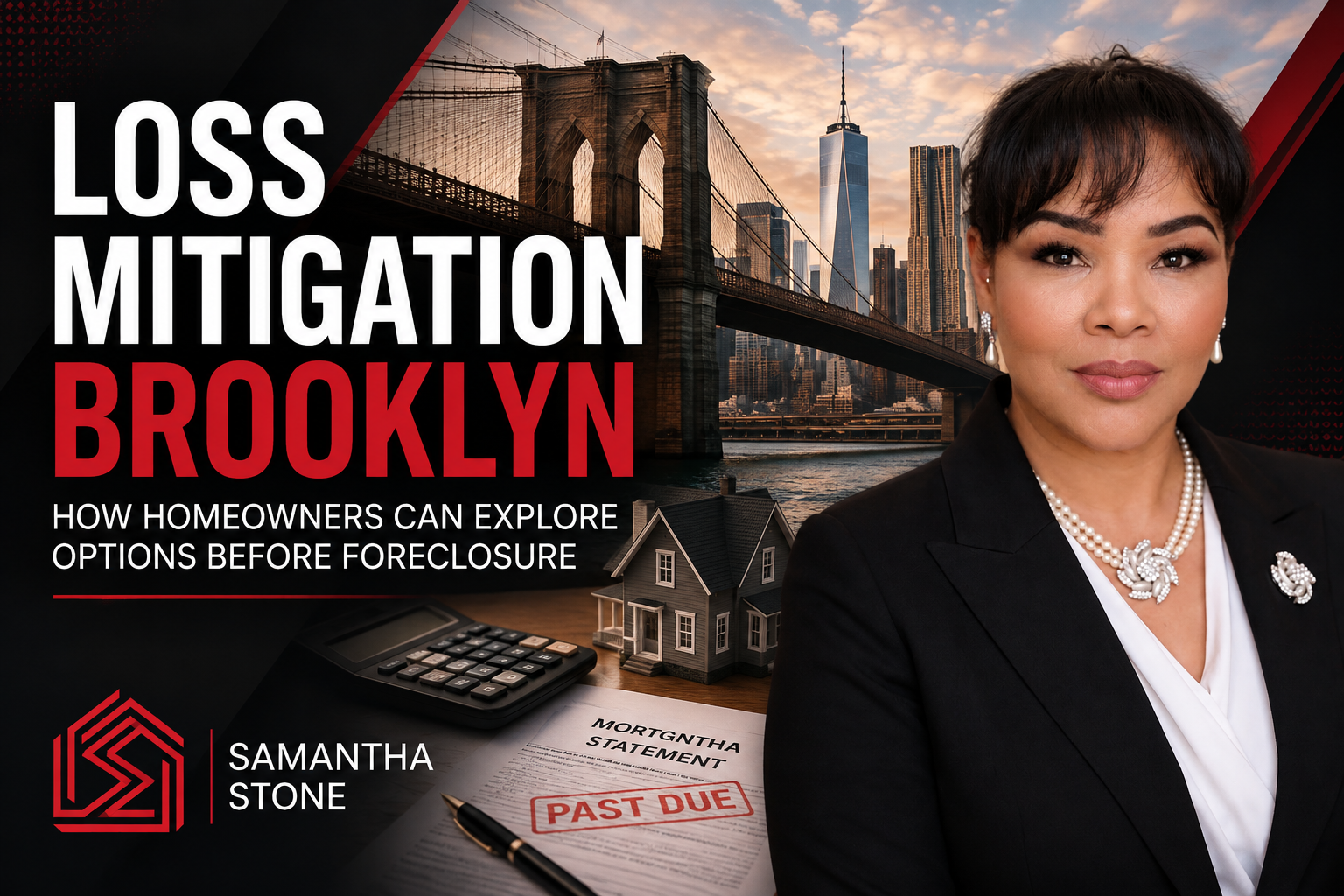
Falling behind on mortgage payments can be overwhelming, especially when you are worried about losing your home. If you are searching for Loss Mitigation Brooklyn, you are likely looking for practical ways to address your mortgage problem before foreclosure moves further forward.
The good news is that missing mortgage payments does not automatically mean you have to lose your home. Depending on your financial circumstances, mortgage type, loan investor, and stage of foreclosure, there may be different options available to address the situation.
Loss mitigation is the process through which a mortgage servicer evaluates possible alternatives to foreclosure. These alternatives can include loan modification, repayment plans, forbearance, short sale, or other solutions. The right option depends on the homeowner’s circumstances and the requirements of the mortgage servicer.
For Brooklyn homeowners experiencing financial hardship, understanding the process early can make a significant difference.
What Does Loss Mitigation Mean?
Loss mitigation refers to options designed to reduce the financial consequences of a mortgage default and potentially avoid foreclosure.
The Consumer Financial Protection Bureau explains that loss mitigation can include options that help homeowners remain in their homes as well as alternatives that allow them to leave the property without going through a foreclosure sale.
For someone looking for Loss Mitigation Brooklyn, this means the first question is not simply whether you are behind on your mortgage. The more important question is:
What options may be available based on your specific financial situation?
A mortgage servicer may evaluate several possible solutions. These can include:
- Loan modification
- Repayment plans
- Forbearance
- Short sale
- Deed in lieu of foreclosure
- Other programs offered by the mortgage servicer or applicable government or local programs
Not every option is available to every borrower. A homeowner should not assume that a particular solution will be approved simply because another homeowner received it.
Why Brooklyn Homeowners Should Act Early
One of the biggest mistakes homeowners can make is waiting until the situation becomes an emergency.
When a borrower first realizes that mortgage payments are becoming difficult, there may still be time to communicate with the servicer, gather financial documents, understand available programs, and submit an application.
The CFPB recommends contacting the mortgage servicer as soon as possible when a homeowner is having trouble making mortgage payments.
Timing can become especially important once foreclosure proceedings are underway.
That does not mean every foreclosure will automatically stop. It means that homeowners should not wait unnecessarily before investigating their options.
What Can Cause Mortgage Hardship?
Financial hardship can happen for many different reasons.
A homeowner may have been making mortgage payments successfully for years before experiencing an unexpected change in circumstances.
Common examples include:
Job Loss
A reduction in income can make an otherwise manageable mortgage payment unaffordable.
Reduced Household Income
A spouse or household member may lose employment, experience reduced working hours, or experience another income change.
Unexpected Expenses
Large medical expenses, family emergencies, repairs, or other unexpected costs can affect a household’s ability to keep up with mortgage payments.
Divorce or Separation
Changes in household income and living arrangements can create difficulties with maintaining mortgage payments.
Death of a Household Member
The loss of an income-producing household member can significantly change a family’s financial position.
Business or Self Employment Problems
Business owners and self-employed homeowners may experience fluctuating income that makes mortgage payments more difficult during certain periods.
The important point is that financial hardship does not always look the same.
When applying for mortgage assistance, homeowners should be prepared to explain what changed, when it changed, and how that change affected their ability to make payments.
What Is a Loss Mitigation Application?
A loss mitigation application is a request for mortgage assistance that provides the information the servicer needs to evaluate available options.
The application process can involve financial documentation such as:
- Recent income information
- Bank statements
- Tax documents
- Mortgage statements
- Information about household expenses
- Information about assets
- A hardship explanation
- Property information
- Other documents requested by the servicer
The exact requirements can vary.
Under federal mortgage servicing rules, a complete loss mitigation application generally means the servicer has received the information required to evaluate the borrower for available options.
This is important because an incomplete application can delay the evaluation process.
If a servicer requests additional documentation, homeowners should respond as quickly and accurately as possible.
Loan Modification Is One Possible Option
For some homeowners searching for Loss Mitigation Brooklyn, a loan modification may be one of the options worth exploring.
A loan modification changes one or more terms of the existing mortgage. Depending on the program and circumstances, a modification can potentially change the interest rate, extend the repayment period, or address certain amounts owed.
The purpose may be to create a payment that is more manageable for the homeowner.
However, homeowners should carefully review any proposed modification before accepting it.
A lower monthly payment does not necessarily mean the homeowner will pay less over the entire life of the loan. Extending the repayment period or changing other terms can affect the total cost of the mortgage.
That is why homeowners should understand both the immediate payment and the long-term financial impact.
Repayment Plans May Also Be Considered
A repayment plan may be appropriate in situations where a homeowner has fallen behind but expects to be able to resume normal payments.
Under a repayment arrangement, the homeowner may pay the regular mortgage amount plus an additional amount toward the past-due balance.
For example, a homeowner who experienced a temporary financial setback may have difficulty paying several missed payments all at once but may be able to repay the amount over time.
Whether a repayment plan is available depends on the servicer and the homeowner’s circumstances.
Forbearance Can Provide Temporary Relief
Forbearance is another form of mortgage assistance that may be available in certain situations.
It generally involves temporarily reducing or suspending mortgage payments for an approved period.
Forbearance does not necessarily eliminate the amount owed.
Homeowners should understand what happens when the forbearance period ends. Depending on the agreement, missed amounts may need to be repaid through a repayment arrangement, modification, or another method.
Before accepting a forbearance arrangement, ask the servicer to explain exactly what will happen to the missed payments.
What If Keeping the Home Is No Longer Realistic?
Loss mitigation is not always about keeping the property.
Sometimes a homeowner’s financial situation has changed so significantly that maintaining the mortgage is no longer realistic.
In those circumstances, alternatives such as a short sale or deed in lieu of foreclosure may potentially be considered.
A short sale generally involves selling the property for less than the amount owed on the mortgage, subject to the required approvals.
A deed in lieu generally involves voluntarily transferring ownership of the property to the mortgage holder in exchange for resolving the foreclosure situation under an agreed arrangement.
These options can have important financial, tax, credit, and legal consequences.
Homeowners should understand the specific terms before making a decision.
What Happens After You Submit a Loss Mitigation Application?
After receiving an application, the mortgage servicer may determine whether the application is complete.
If information is missing, the servicer may request additional documentation.
If the application is complete and submitted within applicable timelines, the servicer generally evaluates the borrower for available options under the applicable rules and loan requirements.
The homeowner may receive:
- An offer for a loss mitigation option
- A request for additional information
- A denial
- Information about other available options
If a loan modification is denied, the homeowner should carefully review the reason for the denial.
Do not simply assume that a denial means there are no other possible steps.
The homeowner may need to determine whether additional documentation can be provided, whether another option may be available, or whether professional assistance is appropriate.
What Documents Should Brooklyn Homeowners Gather?
Preparing documents before contacting the servicer can make the process easier.
Consider organizing:
Mortgage information
Keep your latest mortgage statement and information about your mortgage servicer available.
Income documentation
Gather pay stubs, business income records, benefit statements, or other evidence of current income.
Bank statements
Recent statements can help demonstrate the household’s financial situation.
Expense information
Create a realistic list of recurring household expenses.
Hardship documentation
If your hardship resulted from job loss, medical expenses, divorce, death, reduced income, or another major event, gather documents that help explain the situation.
Property information
Keep relevant property and insurance information available.
The exact documentation required will depend on the servicer and the loss mitigation program being considered.
What If You Are Already in Foreclosure?
Do not assume that being in foreclosure means it is too late to explore available options.
The appropriate next step depends heavily on where the homeowner is in the foreclosure process.
A homeowner who has received legal notices, court documents, or information about a foreclosure sale should take those documents seriously and seek appropriate professional guidance.
Federal rules contain specific timing requirements surrounding loss mitigation applications and foreclosure proceedings.
Because foreclosure law is highly dependent on the circumstances and applicable state law, homeowners should not rely on a generic internet article to determine their legal rights.
Brooklyn Homeowners Can Also Look for Local Assistance
New York City provides foreclosure prevention resources for homeowners.
The NYC Department of Housing Preservation and Development states that the Center for New York City Neighborhoods and its network partners provide foreclosure prevention services, including housing counseling and legal assistance, at no charge to eligible homeowners.
The city’s homeowner resources also direct homeowners toward foreclosure prevention assistance and counseling.
This can be an important resource for Brooklyn homeowners who need help understanding their situation.
You can also review the NYC HPD foreclosure prevention resources and the CFPB mortgage assistance resources for additional information.
How to Approach Loss Mitigation in Brooklyn
If you are searching for Loss Mitigation Brooklyn, start by getting organized rather than ignoring the problem.
Step 1: Review Your Mortgage
Find your latest mortgage statement and identify your current servicer.
Step 2: Understand Your Delinquency
Determine how many payments you have missed and whether you have received foreclosure notices.
Step 3: Document Your Hardship
Write down what changed financially and when the change occurred.
Step 4: Gather Financial Records
Collect income, expenses, bank statements, tax records, and other documents the servicer may request.
Step 5: Contact Your Servicer
Ask what loss mitigation options may be available and request the appropriate application.
Step 6: Submit Complete Information
Incomplete documentation can create delays, so carefully follow the servicer’s instructions.
Step 7: Keep Records
Save copies of applications, documents, letters, emails, and notes from phone conversations.
Step 8: Get Professional Guidance When Needed
If the situation involves a foreclosure lawsuit, complicated mortgage issues, or questions about legal rights, consider consulting an appropriate housing counselor or attorney.
Be Careful of Foreclosure Assistance Scams
Homeowners experiencing financial stress can become targets for foreclosure scams.
The CFPB warns consumers about companies that make unrealistic guarantees, demand large upfront payments, tell homeowners to stop communicating with their mortgage servicer, or ask homeowners to sign documents they do not understand.
Be especially cautious if someone promises:
- Guaranteed foreclosure prevention
- Guaranteed loan modification approval
- Guaranteed debt elimination
- Immediate cancellation of your mortgage
- A way to stop all foreclosure proceedings without reviewing your situation
No legitimate professional can guarantee that a particular mortgage modification or foreclosure outcome will be approved.
Before paying anyone for assistance, investigate the organization and understand exactly what services are being provided.
Frequently Asked Questions About Loss Mitigation Brooklyn
What is loss mitigation?
Loss mitigation refers to options and processes designed to help borrowers address mortgage default and potentially avoid foreclosure. Options can include loan modification, repayment plans, forbearance, short sale, and deed in lieu, depending on the circumstances.
Can loss mitigation stop foreclosure?
It may help prevent or delay certain foreclosure actions when a homeowner qualifies and follows the applicable process, but there is no universal guarantee. Timing, completeness of the application, loan requirements, and applicable law all matter.
Is loan modification the same as loss mitigation?
No. Loan modification is one type of loss mitigation. Loss mitigation is the broader category that can include several alternatives to foreclosure.
What if my loss mitigation application is denied?
Review the denial carefully and determine the stated reason. Depending on the circumstances and timing, there may be additional options or review rights. A homeowner may also want to consult an appropriate housing counselor or attorney.
Is it too late to seek help after foreclosure has started?
Not necessarily. The appropriate options depend on the current stage of the case. Homeowners should act quickly rather than assuming there is nothing they can do.
Where can Brooklyn homeowners find foreclosure prevention assistance?
NYC homeowners can access foreclosure prevention resources through the city’s housing resources and the Center for New York City Neighborhoods network.
Final Thoughts
If you are searching for Loss Mitigation Brooklyn, the most important step is to understand your situation before making a major decision.
Mortgage hardship can happen unexpectedly, and different homeowners may have completely different options. A loan modification might make sense for one borrower, while a repayment plan, forbearance, short sale, or another alternative may be more appropriate for someone else.
The earlier you understand the problem, gather your documents, communicate with your mortgage servicer, and investigate available assistance, the more informed your decisions can be.
If you are already behind on your mortgage or have received foreclosure-related notices, do not ignore them. Review your options as soon as possible and seek qualified assistance when the situation requires legal or housing counseling guidance.
Important: This article provides general educational information and is not legal, financial, or tax advice. Mortgage and foreclosure options depend on the homeowner’s circumstances, loan documents, servicer requirements, and applicable federal, New York, and local laws.